


Shivanshu Vyas has been dreaming of coming to the U.S. for the World Cup for a very long time.
In fact, he’s been counting the days since 2018 when he watched his favorite soccer team, Manchester United, play in a friendly at Miami’s Hard Rock Stadium. For the 32-year-old, being in that big American stadium was overwhelming.
“As soon as I saw the green pitch, it actually sent goosebumps down my spine. And I was a bit teary eyed, not going to lie,” he recalls with a laugh.
But one major thing could stand in his way: Getting a visa in time.
Many fans from around the world are likely to face the same issue. The tournament is being staged by the United States, Mexico and Canada and is considered the biggest global sporting event after the Paris Olympics.
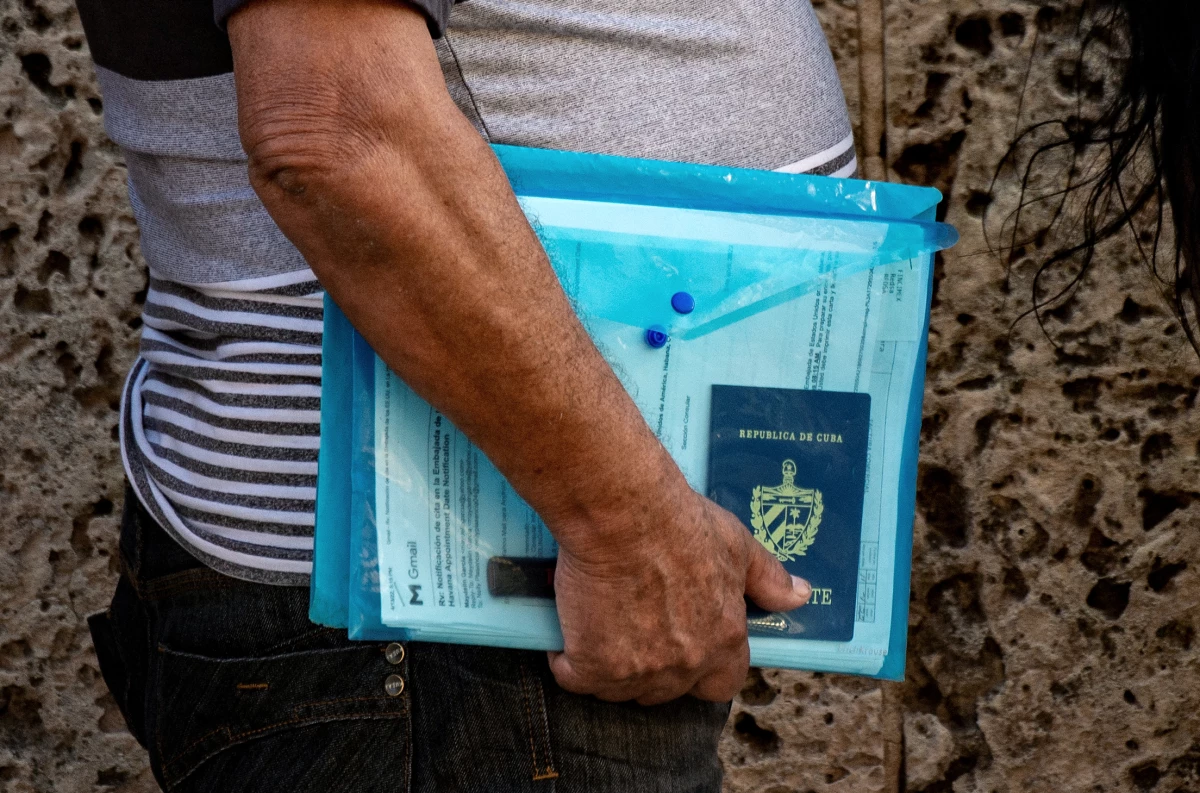
However, not only is it hard to get a U.S. visa, the immigration system is so backlogged that many fans may not be able to secure a visa in time even though the tournament is just under two years away.
Visa wait time in Bogotá? 677 days
The wait time for an interview for a visitor visa in New Delhi can go up to 386 days. It’s worse in some other places with big soccer fans. Take Bogotá in Colombia. The current wait time for an interview with a consular official stands at up to 677 days — longer than the 664 days left before the tournament kicks off.
This is raising alarm bells — from people in the soccer world to members of Congress. A bipartisan group of 21 senators led by Sen. Amy Klobuchar, D-Minn., and Sen. Jerry Moran, R-Kan., issued a letter this month urging the Biden administration to establish a “White House Task Force on Global Sports Events.”

The U.S. is set to host three mega-events in the coming years — the men’s World Cup, followed by the 2028 Summer Olympics in Los Angeles and the 2034 Winter Olympics in Salt Lake City.
The group of senators said expediting immigration wait times needs to be a top priority.
“We encourage your Administration to target wait times of fewer than 31 days for 80 percent of applicants by the end of 2025,” the senators wrote.
Meanwhile, FIFA, the international football association that oversees the event, said it’s working with various sides of the U.S. government on issues, including security and immigration.
“We recognize the urgency of these matters, as well as the role they play in delivering a successful event that will draw millions of visitors from around the world,” FIFA said in a statement to NPR.
Million fans are expected to attend … if they can get here
The next World Cup will be the biggest ever because it is expanding to 48 teams from 32 currently. FIFA projects that millions of fans will attend the 2026 World Cup, with many of them traveling from across the globe.
In online forums, fans have already started venting their frustrations about the challenges in applying for a U.S. visa.
The U.S. has visa waiver programs with 41 countries, but that still leaves many others who will need to apply for a B1/B2 visitor visa.
But the backlog caused by the pandemic combined with an ongoing surge in applications for visitor visas has overwhelmed the resources available at some U.S. consulates and embassies.
Long wait times even impact people from the tournament’s co-hosts, reaching up to 476 days in Mexico City and up to 850 days for foreign residents in Ottawa.
You have to apply for a visa now, even though its 2 years away
That means many people need to rush to apply now, well before they even know which countries have qualified or where they’ll play.
There are workarounds to cut down on the wait time, but they are not easy. They include checking online to pounce on an earlier slot when somebody cancels.
The State Department said it is encouraging people who want to come for the games “to apply now.”
The agency also said it had significantly reduced wait times over the past two years and issued more B1/B2 visas in the first half of its 2024 fiscal year than ever before.
Immigration has long been a hot potato
Travis Murphy, CEO of Jetr Global Sports + Entertainment, an immigration consultancy firm that facilitates travel for athletes looking to play in leagues and at sporting events around the world, says the U.S. needs to urgently deal with the visa backlog.
Other countries that have hosted World Cups recently have implemented expedited immigration systems for visitors. Qatar, for example, provided a simple visa process for anybody with a ticket for a game in 2022.
But Murphy is aware of the challenges for the U.S. Temporarily simplifying the visa process for the World Cup is politically sensitive, given the tensions around immigration.
“In order for a fast pass to work, there has to be a reasonable assumption that the attending fan has no intention to immigrate,” says Murphy, who notes previous hosts like Russia or South Africa don’t have anywhere as many people wanting to visit or immigrate.
“That’s not the case in the United States or Canada,” he adds, given the concerns that some people may use the World Cup as an opportunity to get in and never leave.
Murphy suggests the U.S. could also consider the appointment of a special sports envoy like John Kerry with climate. For Murphy, that level of attention is essential.
“We bid on this,” says Murphy. “We, as a country said, please come to our country. We want to host this event.”
A tourist visa isn’t easy to get either
Back in India, Vyas appears to have some wiggle room, given the wait time is around a year, not as bad as in places like Colombia.
But getting one can be incredibly onerous, and there are still no guarantees he can get one in time.
First, Vyas likely needs to find a steady job. At the moment, he’s self-employed, offering consulting services in engineering. Applying for a visitor visa typically requires a letter from an employer proving the applicant has a steady job that ties them to their home country.
The applicant can also prove they have steady self-employment income but it requires additional paperwork.
Vyas’ situation is also a little complicated because he studied in the U.S. and tried unsuccessfully to stay permanently by getting a work visa.
A consular official could see that as a problem and deny him the tourist visa.
A double blow for this super fan
Being denied a visitor visa would be a double blow for Vyas, who is a big fan of the sport. In 2006, he won a contest organized by ESPN that provided the winner with a trip to serve as a ball boy for a World Cup game in Germany.
Unfortunately, he did not have a passport at the time — and could not get one in time.
That missed opportunity to travel to Germany still haunts him

So coming to the World Cup in 2026 to see German stars like Kai Havertz would fulfill a sports dream..
First though, he needs to get his visa.
“I’m having positive energy,” he says. “I still have two years for that, so I guess I have enough time.”
Vyas does have time, for now. But the clock is ticking and for some fans, it may already be too late.
Transcript:
ADRIAN MA, HOST:
The Summer Olympics just wrapped up, and the Paralympics are still to come. And after that, the next big global sporting event is the men’s soccer World Cup in 2026. Now the U.S. is cohosting the tournament and preparing to welcome fans from all over the world. But with just under two years to go, many fans are worried they may not be able to come to attend the games. NPR’s Rafael Nam explains why.
RAFAEL NAM, BYLINE: Shivanshu Vyas is a longtime soccer fan in India. He’s been counting down the days till 2026.
SHIVANSHU VYAS: I’m a big football fan, and I have been thinking about 2026 World Cup for a long time now.
NAM: That’s when he and his future wife went to see his favorite soccer team, Manchester United, play a friendly. It was at the Hard Rock Stadium in Miami. The experience of being in this big American stadium was exhilarating.
VYAS: As soon as I saw the green pitch, it actually sent goose bumps down my spine. And I was a bit teary eyed, not going to lie.
NAM: Right there, Vyas knew he had to come for the World Cup, but he faces a major issue. He may not get a visa in time. The wait time for a visa interview in New Delhi is 386 days. In Bogota, Colombia, it’s way worse – 677 days, when the World Cup will already be underway. There are reasons for that. The U.S. has a huge backlog of visa applications. On top of that, the number of visitors is surging.
TRAVIS MURPHY: So it’s kind of this perfect storm of different elements that’s causing wait times to balloon, and we now have the World Cup coming in on the tail end of this. And the demand, I think, is not probably fully appreciated in terms of how big that will be.
NAM: That’s Travis Murphy, the CEO of Jetr Global, a sports immigration consultancy firm. He’s not the only one concerned. Senators, 21 of them, urged the White House this month to create a special task force to coordinate planning and expedite visa wait times because it’s not just the World Cup. The U.S. is also hosting the Summer Olympics in 2028 and the Winter Olympics in 2034. So getting this tournament right is critical.
MURPHY: But we bid on this. We, as a country, said, please come to our country. We want to host this event.
NAM: Murphy knows there’s the balance. The U.S. can’t just fling open its doors. People could try to use the World Cup as a chance to get in and never leave. But he says the U.S. needs to figure out how to get that balance right to avoid shutting out people like Vyas. Vyas knows the challenges, but he’s hopeful.
VYAS: I’m having positive energy, and I’m trying to sort of manifest that reality (laughter). Still have two years for it, so I guess I have enough time.
NAM: Yes, but the clock is ticking. One big problem – Vyas is looking for a steady job because he knows his consulting gig could be a reason enough to deny his visa. For Vyas, that would be devastating.
VYAS: It would be, for sure, but I guess that’s just how life is. You got to deal with it and move on.
NAM: Because as much as Vyas wants to come to the U.S. for the World Cup, he also knows a visa could stand in his way. Rafael Nam, NPR News.
(SOUNDBITE OF CIRCLES AROUND THE SUN’S, “MONEY’S NO OPTION”)
