


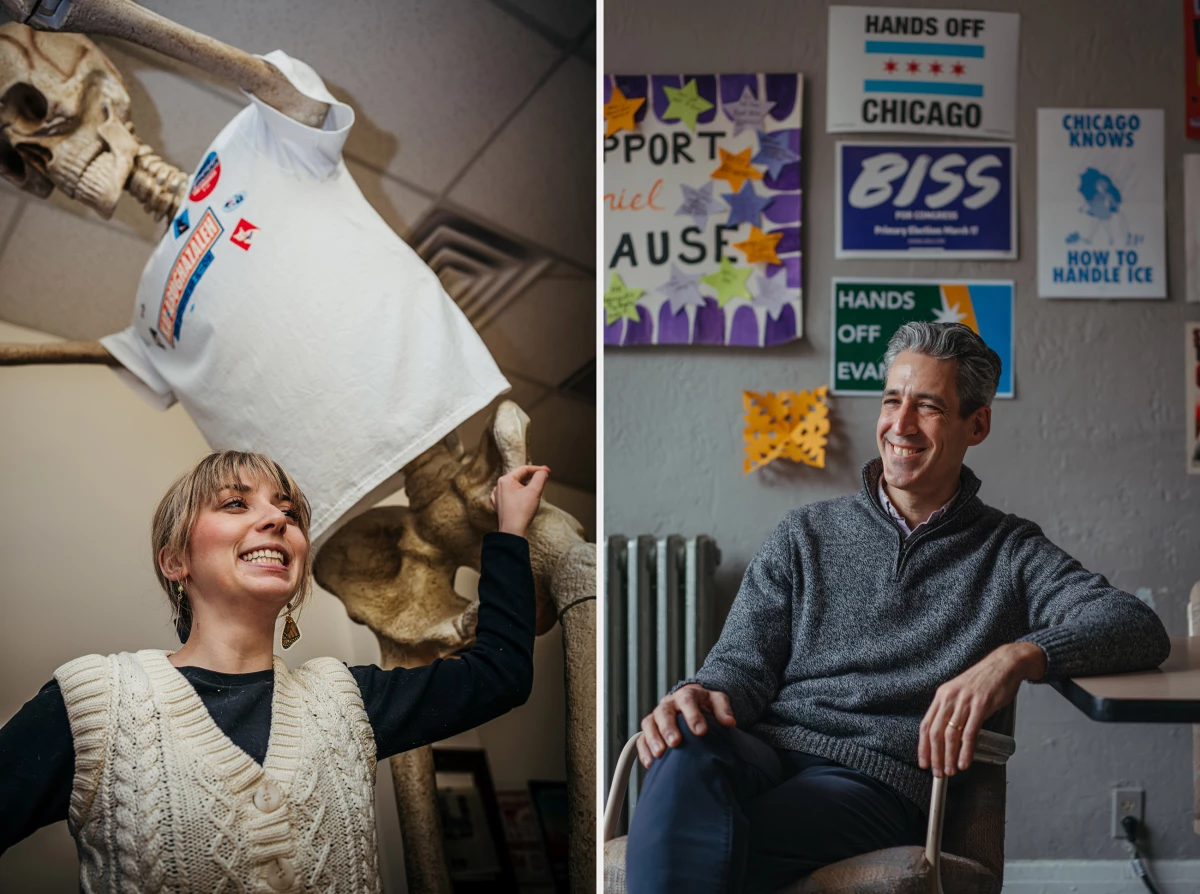
(Jamie Kelter Davis for NPR)
On an overcast Saturday in Evanston, Ill., as local union members file into a small campaign office, sip coffee and get ready to go canvass, a classic campaign scene begins to take shape.
“This group of people here this morning is the best reminder of what’s at stake,” said Daniel Biss, the mayor of Evanston. “We are in a crisis for working people in this country.”
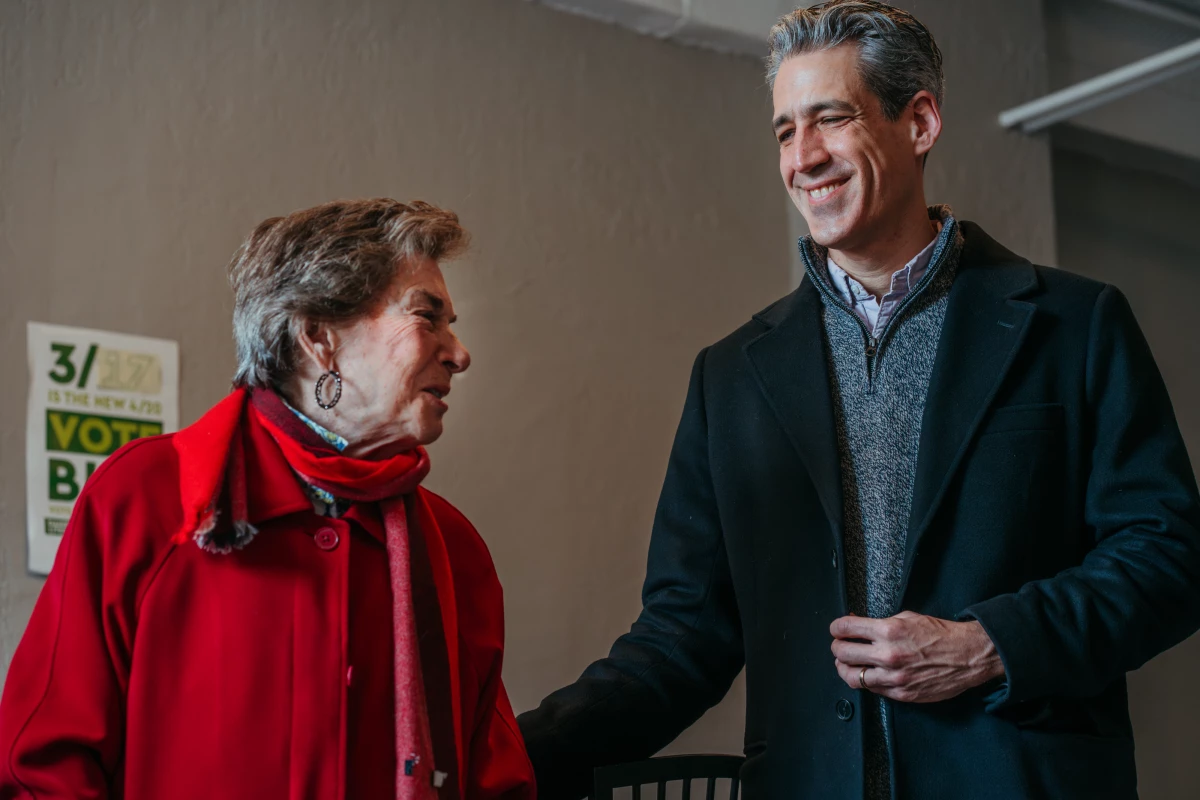
He’s running to represent the state’s 9th congressional district, an area that includes Evanston and a stretch of the north side of Chicago. It’s been held by Democratic Rep. Jan Schakowsky, 81, for the last 27 years. But her impending retirement opens up a rare vacancy, and Biss is one of 15 Democrats vying to succeed her, with top candidates spanning three generations, from Gen X and millennials to Gen Z.
The race for this safe blue seat comes as many within the Democratic base are calling for change within their party, with some demanding a new generation of leaders. In Illinois’ primary on Tuesday, residents in this district will help decide what the next chapter of Democratic leadership might look like.
“I would say that the transition from Jan Schakowsky to me is one of generational change, for sure,” Biss said in an interview.
Biss, who is 48 and Gen X, leads in local polls and has the backing of Schakowsky, as well as other party leaders like Sen. Elizabeth Warren, D-Mass. As supporters head out to knock on doors, he argues he’s most equipped to meet this moment.
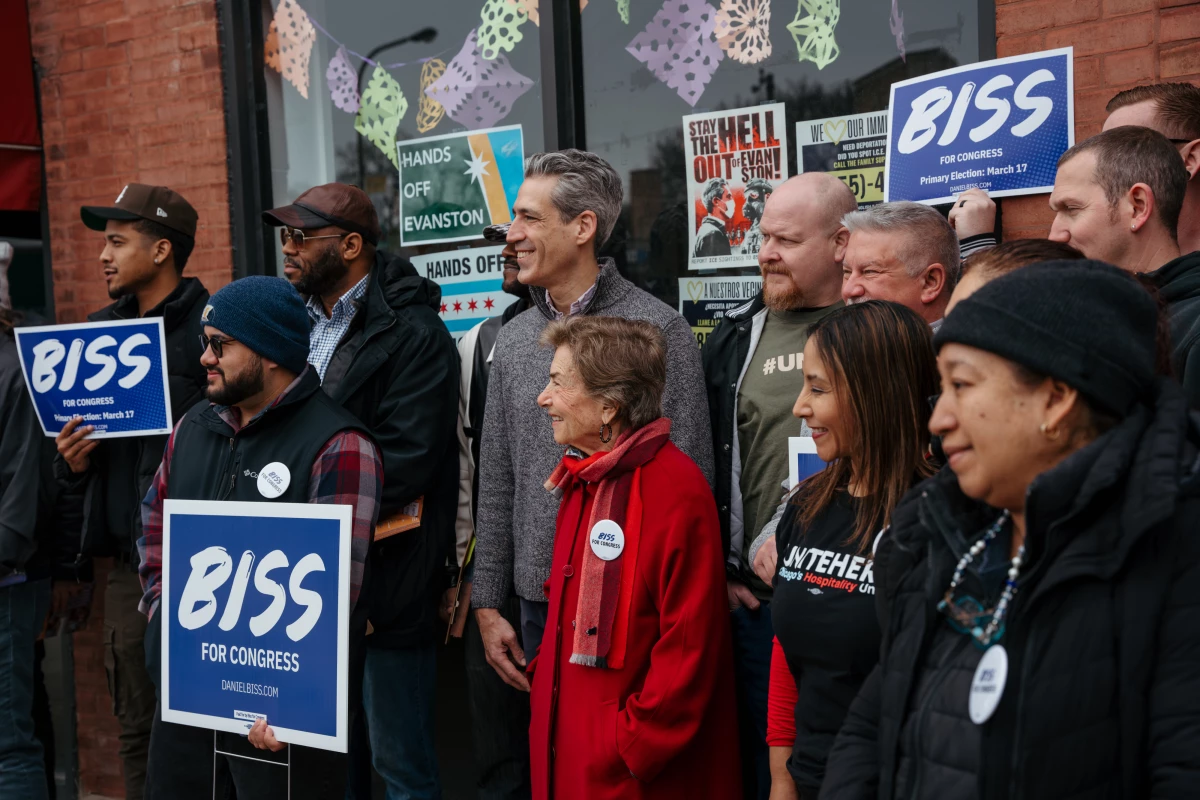
“There’s nobody else who’s done both things that I think we need right now,” he said. “Fought and won inside of government, making real change, and fought and won out on the streets as an activist. And I just don’t think we can afford to compromise on either of those two things.”
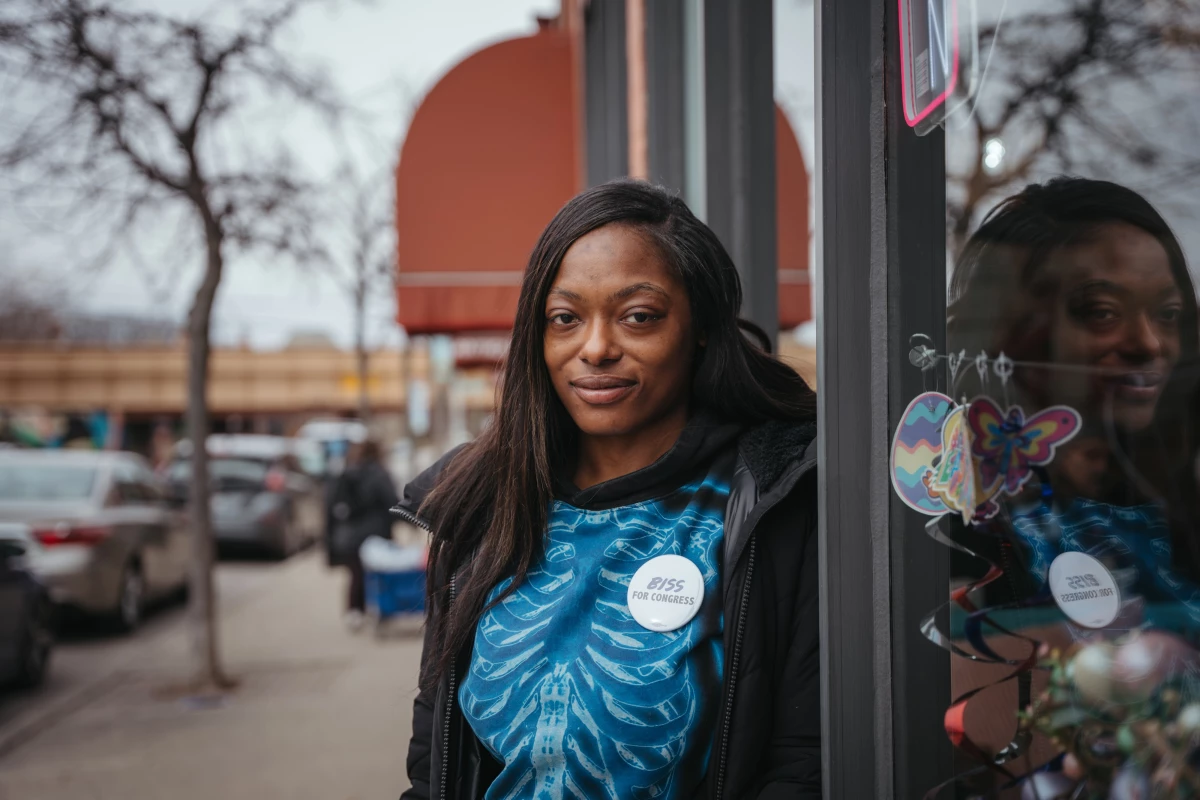
Seara Clayborn, 30, is with Operating Engineers Local 150. She’s voted for Schakowsky since she was 18. This year she’s backing Biss.
“I like his idea of progressive change in moderation because a lot of things that are currently in place, we have to go through the processes to get them dismantled, to reconstruct them,” she said. “I feel like a lot of times when we think of younger progressives, we’re thinking like it needs to happen right now and that’s just not ideal for most things.”
Biss has pushed for Democrats to fight harder against President Trump’s agenda and advocate more aggressively for solutions to high costs. But in this district, where the primary is more competitive than the general, policies aren’t what’s dividing the field. Instead, it’s over to what extent candidates want to scrap party norms both in office and on the campaign trail.
A challenge from a newcomer
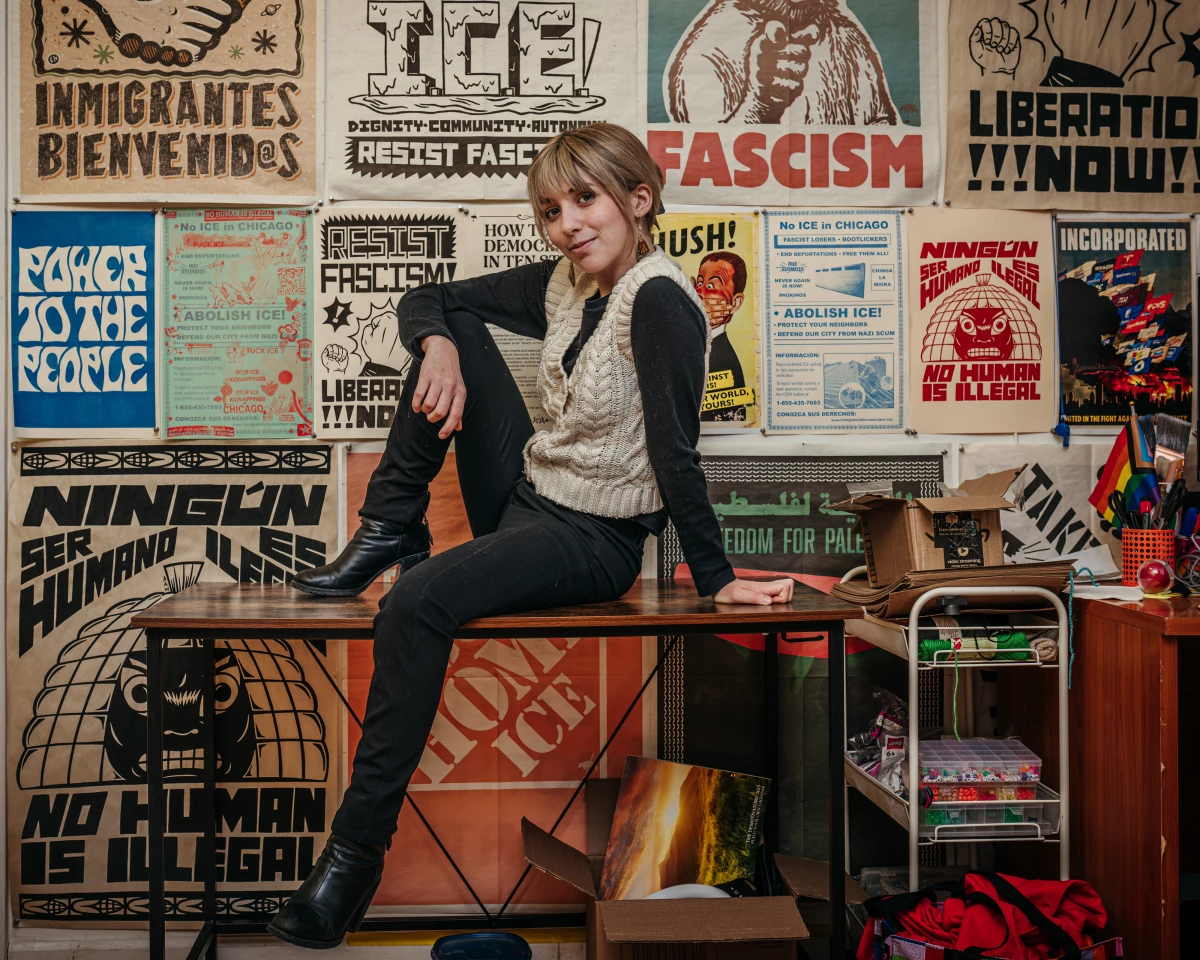
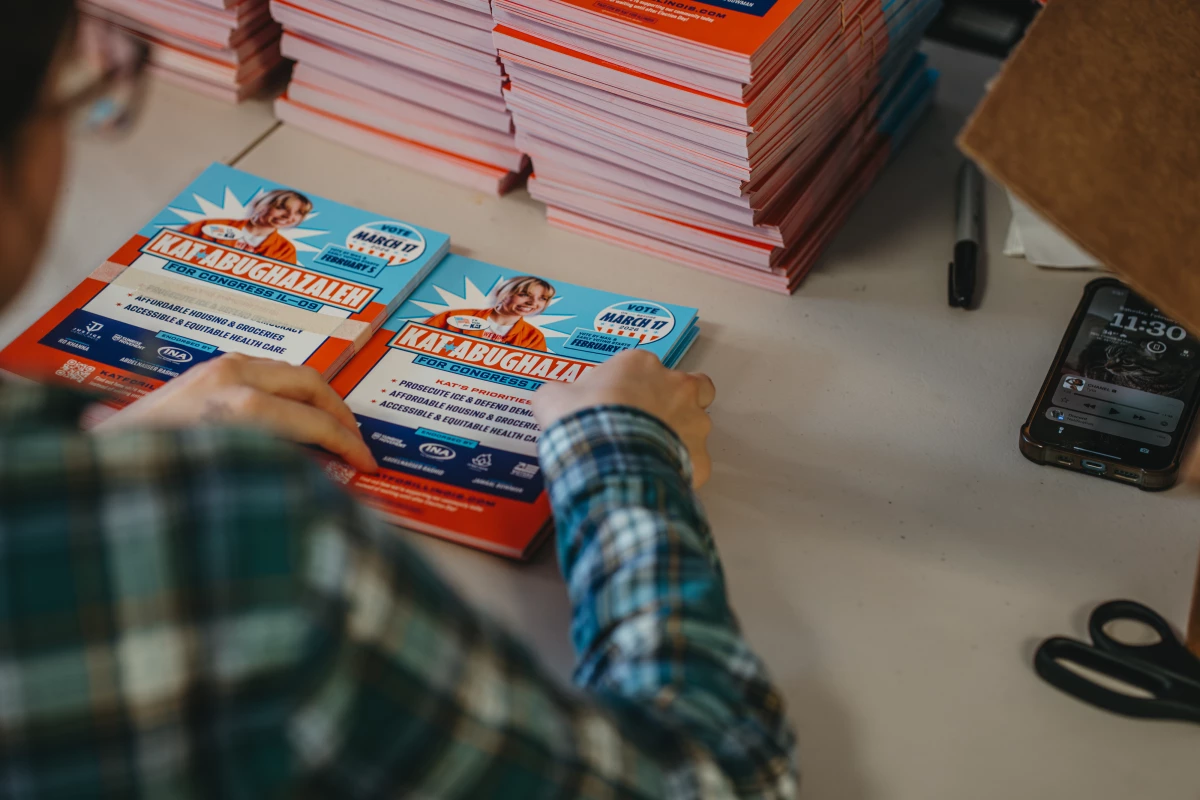
At Kat Abughazaleh’s campaign office on the north side of Chicago, there’s a pile of t-shirts that say, “What if we didn’t suck?”
“There is so much — not just in this race — but across the country that we’re seeing from establishment candidates where they would make a fine congressman in 2014,” she said. “But it’s not 2014. It’s 2026, and I act like it.”
Abughazaleh, who’s running to the left of Biss, is a 26-year-old first-time candidate with a background as a progressive researcher and commentator covering far-right political figures.
She’s faced concerns over her knowledge of the area, having only moved to Chicago in 2024 and initially lived in a neighborhood outside the district.
However, after nearly a year of campaigning, she’s become one of the most high-profile candidates in the race. She’s gained traction through a large and active online presence, is polling second to Biss and leads in fundraising.
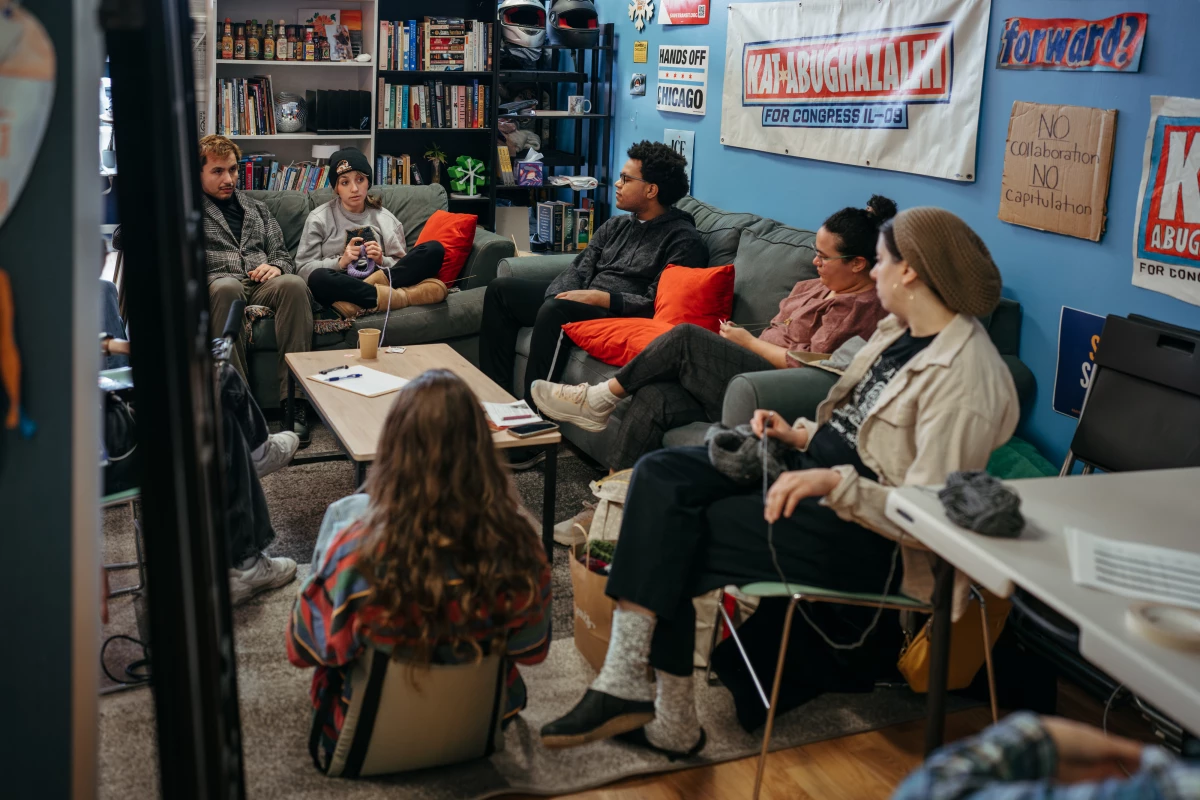
The campaign is also using a non-traditional ground game. In addition to typical outreach like phone banking and canvassing, the campaign has turned the front of its office into a mutual aid site. There’s a rack of coats and jackets right by the entrance, along with shelves of folded clothes, nonperishable food and toiletries, all labeled in both English and Spanish and available for anyone who comes in.
They’ve also tried to be creative in what events they organize. Abughazaleh hosts weekly knitting circles, and at a recent one, around a dozen people showed up with their needles and yarn, ready to talk politics.
“I think that the Democratic Party right now needs to stop trying to make everyone happy … they need to just own whatever it is they’re going to fight for. They’re waffling,” supporter Monica Morris, 33, says as she knits. “The focus is on ‘people pleasing’ versus actually getting something done.”
Though many residents in the district say age isn’t a deciding factor in their vote, some supporters at the event, like Morris, acknowledge they do share generational experiences, especially when navigating financial concerns.
“There are issues that are affecting millennials and Gen Z that did not affect boomers, for example, student loans. I have a horrendous amount of student debt and I’m not able to save for retirement,” Morris said.
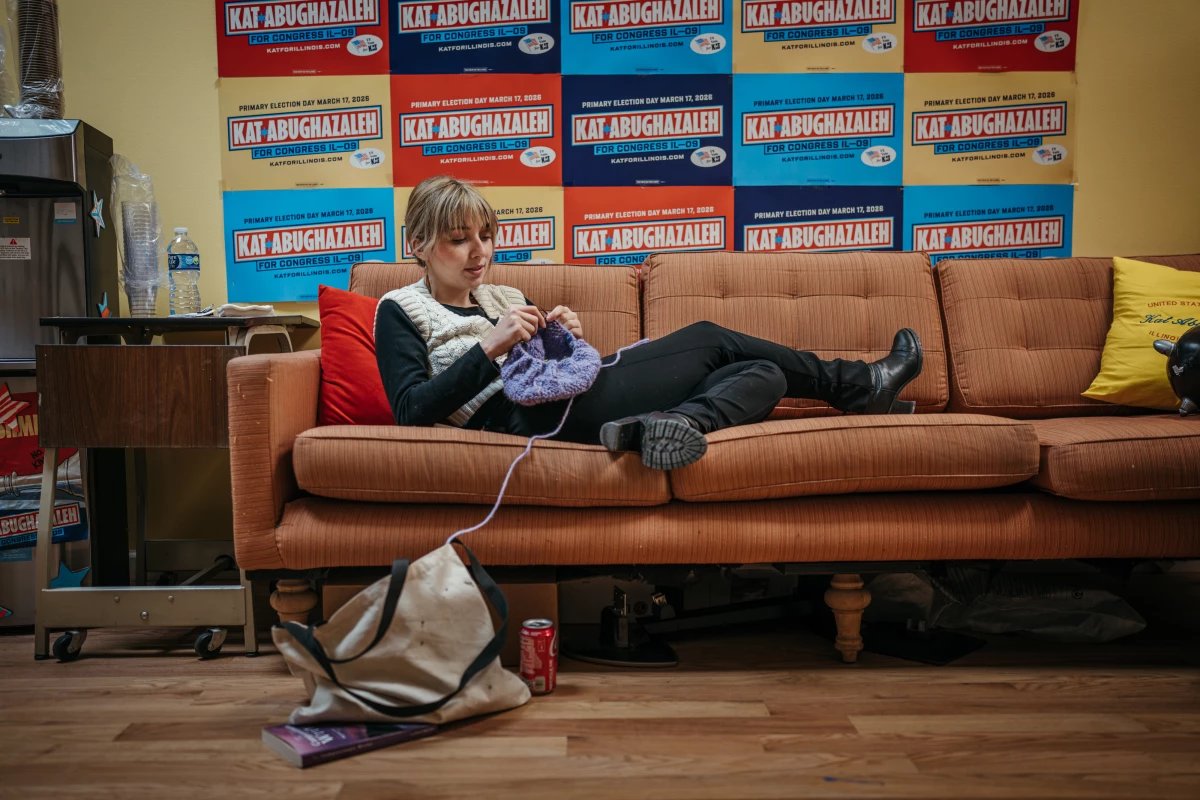
As Abughazaleh worked on a purple hat for one of her supporters, she says Democrats have failed to hold their ground when pushing for change in Washington.
“Bipartisanship is negotiating different approaches to a similar goal. I think that goal should be: everyone can afford housing, groceries and health care with money left over to save and spend. I think that is the true center,” she said. “We can’t just look at compromise as getting your hand cut off and being grateful they left you your pinky.”
It echoes a broader anti-establishment rhetoric being championed by some younger and progressive politicians around the country. Notably, last year, Zohran Mamdani successfully ran on that message to become mayor of New York, engaging with base voters who had felt disconnected from the party.
But to Abughazaleh, the Democratic Party is “terrified” of progressive populist ideas.
“It means risking power. It means not being able to have a stranglehold on donors and on re-elections,” she adds. “If [Democrats] actually wanted to have your name live on in a way that’s positive, you would be uplifting the ‘Mamdanis ‘ of the world and not trying to shut them down.”
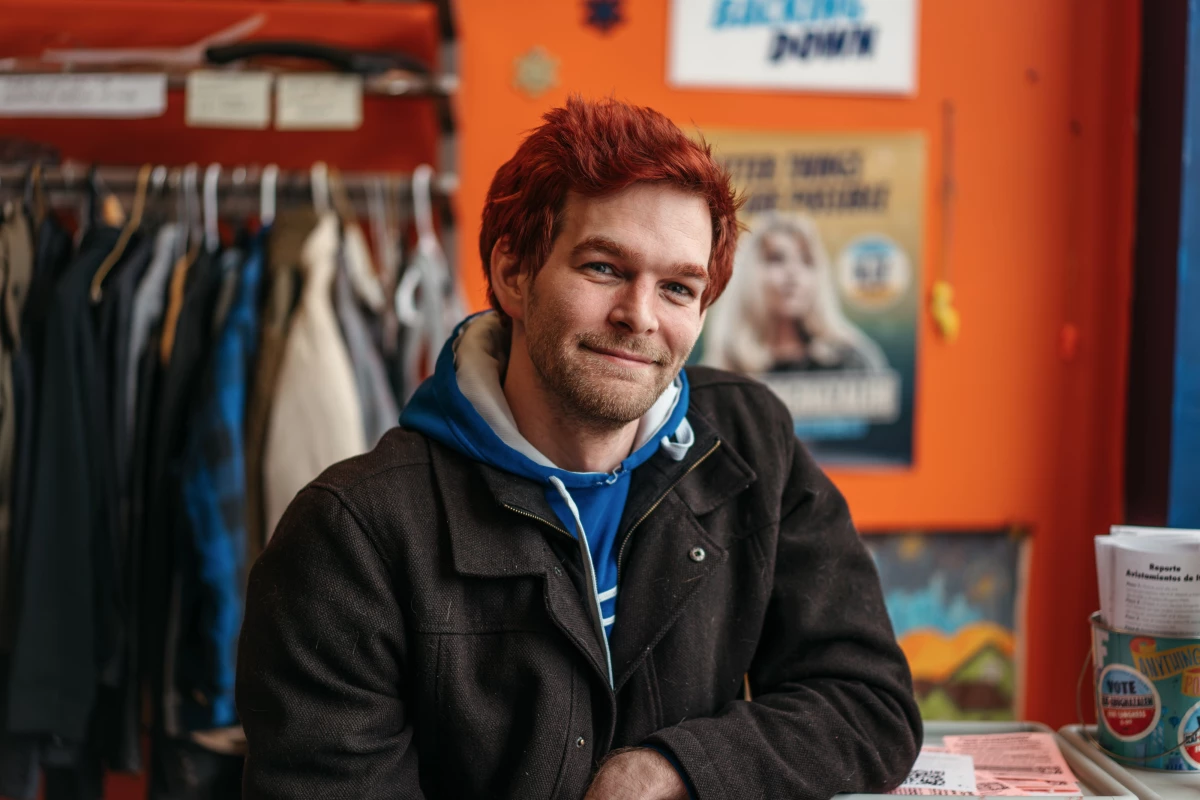
At the front of the office, Jim Kress drops off donations for the mutual aid site.
“I’m just one person of a million that’s struggling,” said Kress, who is in his late thirties and recently lost his job. “I just don’t think that most congresspeople are seeing those things. They’re talking to donors.”
Kress voted for Biss in 2018 when he ran for governor, but now says he’s supporting Abughazaleh, referring to the Evanston mayor as “typical neo liberal Democratic establishment.”
The role of special interest dollars
Tuesday’s primary comes as a broader debate rages within the Democratic party about the influence of special interest groups, especially pro-Israel groups like AIPAC. In this race, individuals and groups aligned with AIPAC have reported spending millions in support of another candidate, state Sen. Laura Fine, who is Jewish, and polling third behind Abughazaleh, who is Palestinian American and has rejected money from such groups.
Biss, who is Jewish, has denounced AIPAC, but has disclosed meeting with the group towards the start of his campaign. He has faced criticism for not taking a clearer stance on whether he opposes sending U.S. aid to Israel. While Abughazaleh has characterized the war as a genocide against Palestinians, Biss has refrained from doing the same. Both candidates have been the subject of attack spending by AIPAC-linked forces.
Even with the current spending dynamics, Biss appears best positioned to win this primary, according to Jerry Morrison, a retired political consultant who managed Schakowsky’s 1998 campaign.
“Evanston is a big town – 80,000 people – very, very liberal and very affluent, which means they’re going to vote in big numbers, and I think they’re going to vote overwhelmingly for Daniel,” he said.
Surveying the field, Morrisson is doubtful there’s a candidate who can top Biss – especially a challenger running further to the left. However, if she were to pull off an upset, Morrison argues it would mark a striking shift in what issues base voters prioritize in primaries.
“Ten years ago, if someone would have parachuted into a district like this and tried to run for the seat, they would have been a single-digit candidate,” he said. “It is an interesting dynamic that primary voters have become so ideological.”
“Trust can only be earned with time”
These candidates may have captured significant attention, but 28-year-old local organizer and progressive candidate Bushra Amiwala is committed to representing her hometown in Congress. She has sought to chart a more middle course between establishment Democrat and progressive firebrand.
Running down the platform at Howard Station in Chicago, she just barely makes it onboard before the train doors close. Headed towards the suburbs, she looks out the window and spots three houses with yard signs supporting her campaign.
“We’re in home base right now,” she said. “There is just so much that makes this place so special and that care cannot be replicated or bought.”
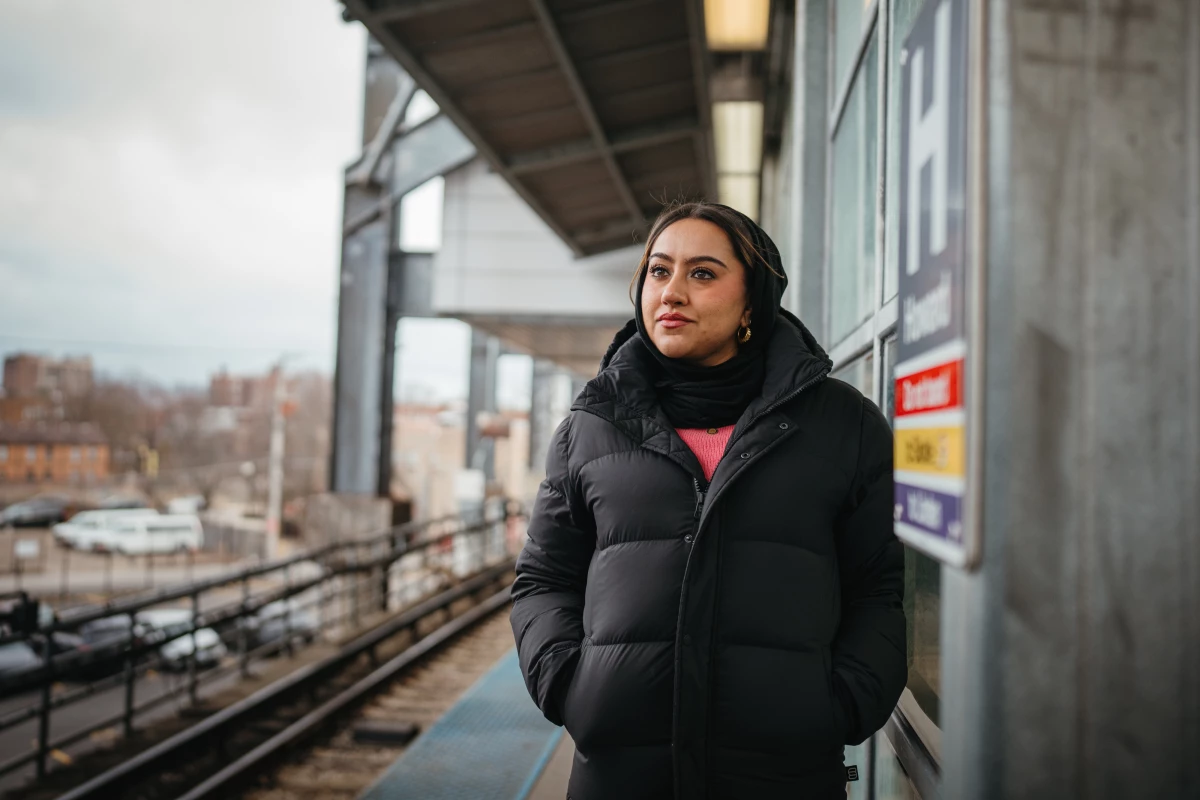
Her political ties date back years. At 21, she won a seat on her local school board, becoming one of the first Gen Zers elected to office and the youngest Muslim elected official in the U.S.
But in this packed primary race, she’s struggled to break through, trailing all three top candidates in local polling.
Instead, she’s hoping a grassroots, local message can bring her to victory.
“People listen to those who they know and who they trust,” Amiwala said, touting roughly 20 visits to nursing homes and senior living facilities, as well as to nearly every high school, college and university in the district.
“Trust can only be earned with time,” she added. “There is nothing you can do to overcompensate that piece, and trust is what is most lost among the Democrats today.”
Transcript:
AYESHA RASCOE, HOST:
Voters in Illinois head to the polls this Tuesday for primary elections. For Democrats, the vote in this reliably blue state comes as many within the base are demanding change, with some even calling for a new generation of leaders. NPR political reporter Elena Moore traveled to one Chicago area district to see how those calls are resonating with candidates.
UNIDENTIFIED PERSON #1: You want me to just take it to go?
ELENA MOORE, BYLINE: It’s Saturday morning, and a bunch of local union members file into a small campaign office in Evanston, Illinois. They prep for a day of canvassing. There’s coffee and doughnuts. It’s a traditional campaign scene.
DANIEL BISS: I’m the mayor. If you’re not from here, welcome to Evanston.
MOORE: Folks are here to support Daniel Biss, mayor of this small city north of Chicago. It’s part of a district that’s had the same member of Congress for the last 27 years, Democrat Jan Schakowsky. The 81-year-old is retiring, and the top candidates vying to replace her span three generations, from Gen X and Millennials to Gen Z. So voters have to decide what a new era of Democratic leadership here should look like. Schakowsky is hoping to pass the torch to Biss, a 48-year-old Gen Xer.
BISS: The balance of power is shifting from workers to corporations. We got to blow that up, and I’m going to go to Congress and be a part of blowing that up.
MOORE: Recent polls show Biss leading in a field of more than a dozen Democrats.
BISS: There’s nobody else who’s done both things that I think we need right now – fought and won inside of government and fought and won out on the streets. And I just don’t think we can afford to compromise on either of those two things.
MOORE: Thirty-year-old supporter Seara Clayborn showed up to canvas.
SEARA CLAYBORN: I like his idea of, like, progressive change in moderation as somebody that is not the biggest fan of drastic change instantly.
MOORE: This has establishment support, though he also says Democrats need to fight harder against President Trump’s agenda and push harder for solutions to high costs. But in this district, where the primary is more competitive than the general, policies aren’t what’s dividing the field. Instead, it’s over how much they want to scrap party norms, both in office and on the campaign trail.
KAT ABUGHAZALEH: Yeah. Do you want me to…
UNIDENTIFIED PERSON #2: …In the lobby to stop to talk…
MOORE: Ten minutes away, on the north side of Chicago, 26-year-old first-time candidate Kat Abughazaleh is knitting a hat for one of her supporters.
ABUGHAZALEH: So we had a livestream where we promised anyone who donated, like, above X amount, I would make them a hat, and so this is the last hat that I have to finish.
MOORE: The campaign hosts a weekly knitting circle where supporters can come by the office and talk politics.
ABUGHAZALEH: Bipartisanship is negotiating different approaches to a similar goal. That goal should be everyone can afford housing, groceries and health care with money left over to save and spend. But we can’t just look at compromise as getting your hand cut off and being grateful they left you your pinky.
MOORE: Abughazaleh has a background as a progressive researcher and commentator. She’s faced concerns about her knowledge of the area, having only moved to Chicago in 2024. But she’s also one of the most watched candidates in this race with a large online presence and a nontraditional ground game. The campaign phone banks and canvases, but they also hold events like this one. As Abughazaleh knits, she tells the group what she thinks is wrong with her party.
ABUGHAZALEH: The Democratic Party has been terrified of the idea of progressive populism because it means risking power. It means not being able to have a stranglehold on donors and on reelections.
MOORE: It’s part of a broader anti-establishment message, energizing many Democrats. And though folks in this district say age won’t decide their vote, some younger supporters admit they do share generational experiences, especially with financial concerns. Many also worry about the role of special interest groups in politics. Abughazaleh has criticized Democrats for accepting money from super PACs and pro-Israel lobbying groups like AIPAC. Those are top issues for Jim Kress. He’s in his late 30s and actually voted for Biss when he ran for governor a few years ago, but now he’s backing Abughazaleh.
JIM KRESS: It’s just like your typical neoliberal Democratic establishment that I’m tired of seeing and tired of giving my vote to. So Kat pretty much hit the nail on the head when she said, the people you vote for should be working for you, not the other way around.
MOORE: Biss has sworn off donations from AIPAC, but it’s a fight that’s captured attention in this race.
(SOUNDBITE OF ARCHIVED RECORDING)
AUTOMATED VOICE: This is a yellow line train to Dempster-Skokie.
MOORE: Twenty-eight-year-old Bushra Amiwala has struggled to break through in the race, but looking out the window, she still sees a path to victory.
BUSHRA AMIWALA: I literally have seen three different Bushra yard signs that I just happened to see, and it’s ’cause we’re in home base right now.
MOORE: At 21, she was one of the first members of Gen Z elected to office, serving on her local school board. Now Amiwala wants to represent her hometown in Congress. But the crowded field is a challenge.
AMIWALA: It can be really confusing and difficult to navigate the myriad of options we have, but that’s why this election matters so much.
MOORE: It’s districts like these, she says, where progressive leaders can push for ambitious policy. So at a moment when some longtime Democrats are stepping aside, who voters elect in solid blue seats like this one could offer a glimpse into the party’s future.
Elena Moore, NPR News, Chicago.
(SOUNDBITE OF THE RUGGED NUGGETS “RUGGED WALK”)
