


Historically, a dandy is an elegant dresser who challenges social norms. The Metropolitan Museum of Art‘s Costume Institute examines the Black dandy — think Prince or Janelle Monáe — in its current exhibition, “Superfine: Tailoring Black Style.” The exhibition runs at the Metropolitan Museum of Art in New York City through October.
“Superfine” uses garments, paintings, video and more from the 1700s to today to look at how Black style has been used both to keep people subjugated and to help them be more free.
“It highlights the power of style to transform one’s identity and challenge existing hierarchies, and by doing that, unlocking possibilities,” said Max Hollein, the chief executive officer of the Met Museum, in remarks to the media.
Monica L. Miller, a professor at Barnard College and guest curator for the Met exhibition, is the author of the 2009 book Slaves to Fashion: Black Dandyism and the Styling of Black Diasporic Identity, on which the show is based. “Not only is the dandy somebody who pushes boundaries and particularly in relationship to class, gender, sometimes sexuality,” she told NPR, “but then, when you think about the dandy as racialized as Black, he’s also pushing boundaries of what might seem acceptable.”
Black dandies blended African and European style, and some designers continue in that vein.
One of the contemporary designers whose work is in the show is Samuel Boakye, whose clothing line, Kwasi Paul, draws from his family’s native Ghana. He said he loved his father’s style: “I wanted to commemorate his swag,” he said.
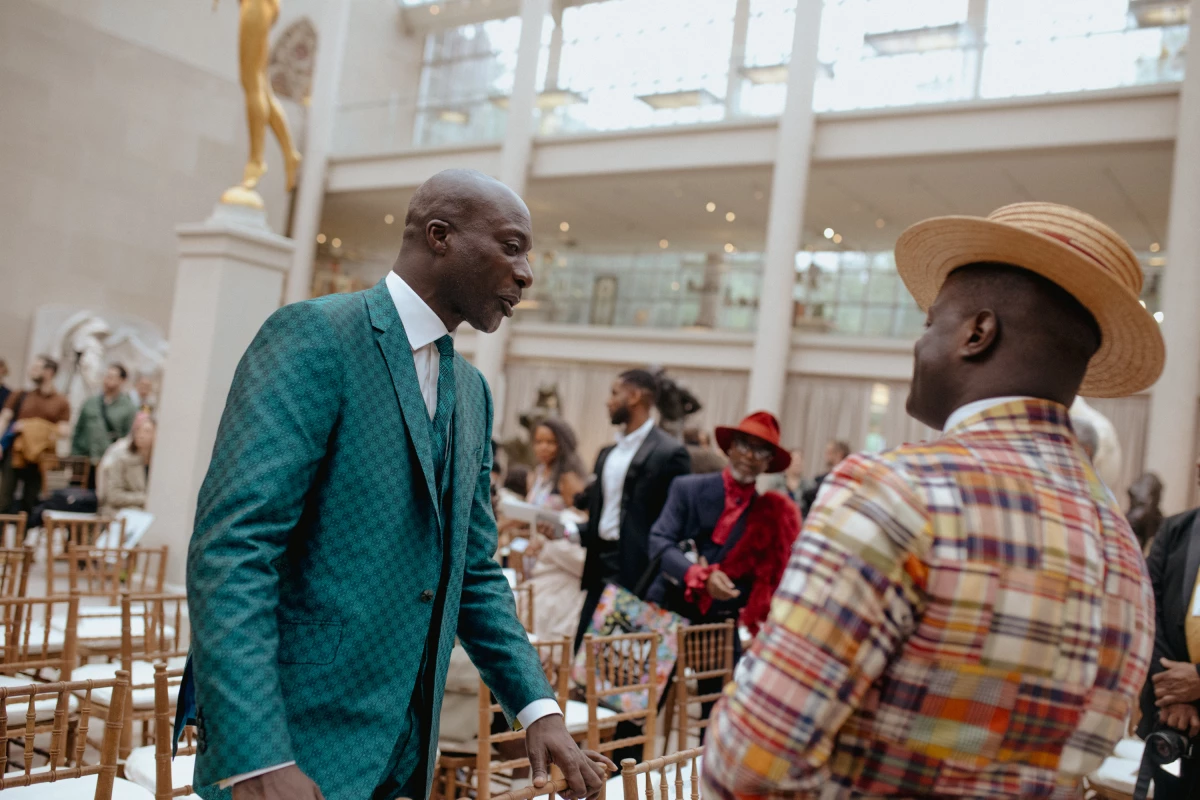
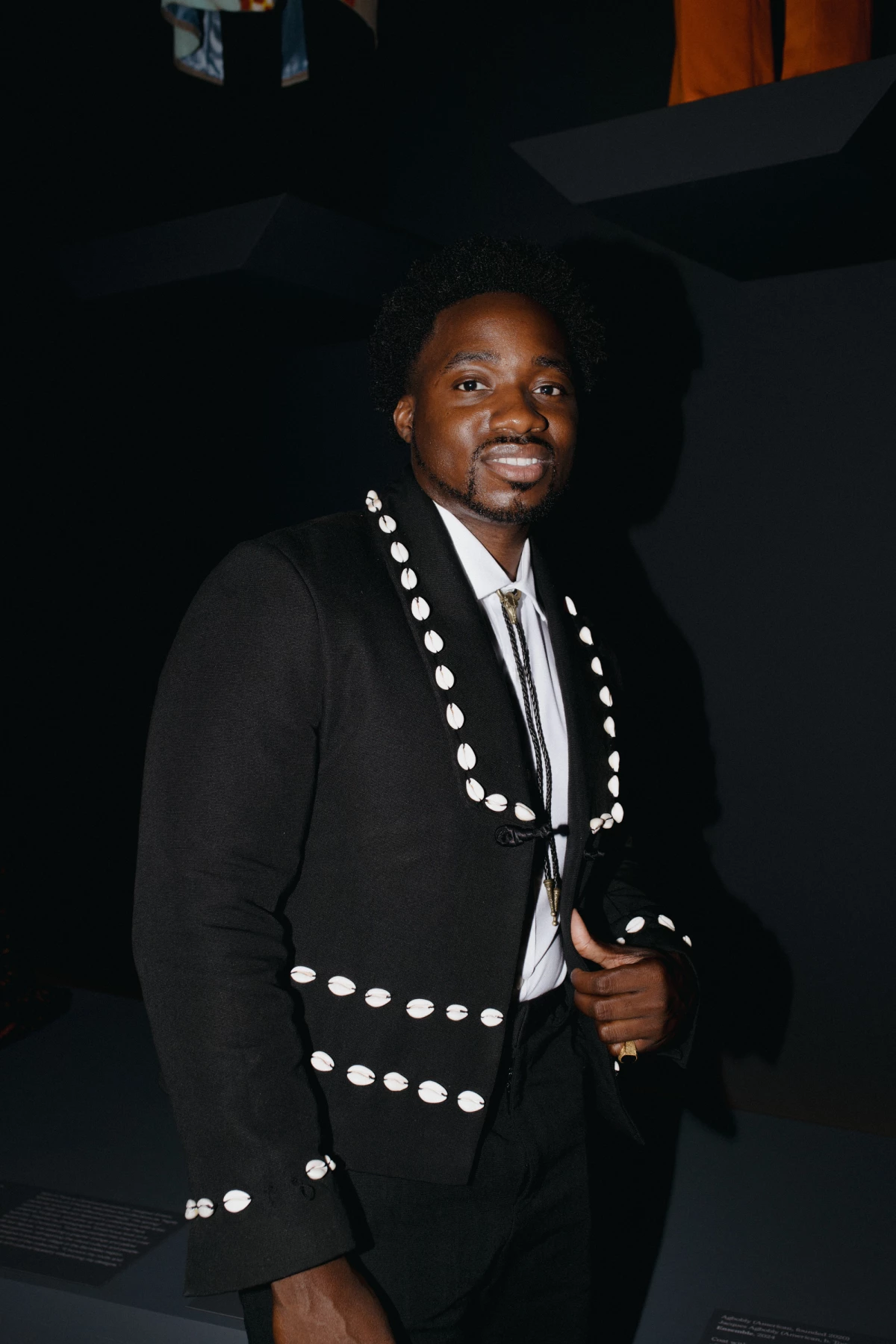
Some photos from the press opening of “Superfine” are below.



Transcript:
JUANA SUMMERS, HOST:
A new exhibition at the Metropolitan Museum of Art in New York looks at Black dandyism. It focuses on clothing from the 18th century to contemporary Black designers, and it inspired the recent Met Gala theme – “Superfine: Tailoring Black Style.” Fashion is often described as an individualistic pursuit, but WNYC’s Amanda Rozon spoke with some designers who share how their families influence their pieces.
SAMUEL BOAKYE: The pants is actually named after my father Kingsley (ph) ’cause I loved his style back in the day. I wanted to commemorate his swag.
AMANDA ROZON, BYLINE: Samuel Boakye is standing next to a mannequin that’s wearing a long coat in a patterned yellow and sunburst orange, layered over burnt-orange bootcut pants. He says his clothing line, Kwasi Paul, draws from his family’s native Ghana.
BOAKYE: I was really inspired by it because when they came to this country, it wasn’t easy. But just by looking at the pictures, you can still see, like, the joy, even just in how they dress.
ROZON: Boakye’s one of the designers highlighted in the exhibition, “Superfine: Tailoring Black Style.” Cocurator Monica Miller says a Black dandy is an elegant dresser who challenges social norms.
MONICA MILLER: Not only is the dandy somebody who pushes boundaries, and particularly in relationship to class, gender, sometimes sexuality, but then, you know, when you think about the dandy as racialized as Black, he’s also pushing boundaries of what might seem acceptable.
ROZON: Think Prince or Janelle Monae.
MILLER: We think about dandyism as a strategy and a tool of self-definition but also an art.
ROZON: Another outfit featured is by the London-based designer Nicholas Daley. He says he’s most proud of the shoes – a pair of loafers in a patchwork of beige and browns that he created with the shoe brand Clarks.
NICHOLAS DALEY: My granddad – he was a shoemaker in Jamaica.
ROZON: An orange and red beret on the mannequin’s head was knitted by Daley’s mother.
DALEY: So yeah, it’s like, mom on the top, dad on the bottom, and everything in the middle (laughter).
ROZON: The exhibition runs at the Metropolitan Museum of Art in New York City through October. For NPR News, I’m Amanda Rozon in New York.
