

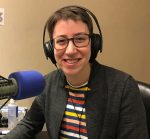

Rev. Chontell Nelson Washington: After the murder of George Floyd and after all of the COVID deaths that were happening in the state, there was so much unrest and dismay that was going on that, because we are faith leaders, we know that it is our role to be part of this healing process. And so it was important to us all to come together to be a voice for change and to be a voice for compassion and for healing. So that’s why we’re getting together today.
Sofia Rudin: And specifically, today is a call to action. What action are you calling for?
Washington: Well, I’m glad you asked that. We are calling for changes in racism, we’re calling for changes in the disparities in white privilege that exist, where we’re calling for changes in policy, but calling for changes in the representation of people of color at the table. One of the tangible changes that we’re calling for is the release of the name “The State of Rhode Island and Providence Plantations.”
Rudin: Into just “The State of Rhode Island?”
Washington: That is correct. The name, the additional part, the “Providence Plantations,” people have been putting [its removal] on our ballots for years and it continually does not get voted and passed to drop it. And people cite their reasons for voting against dropping it as, “Oh, it’s history. It’s historical.” But there are so many things in history in this country that we should not be proud of and the Providence Plantations is one of them.  Rudin: Do you see a parallel there with the fight to take down Confederate monuments?
Washington: Absolutely, I do. Absolutely. I get bills from the state of Rhode Island. I get mail from the state of Rhode Island. And every time that I receive a piece of mail that the taxpayers’ money pays for the paper, the stamp, the ink, I do not need to be reminded that people built the strength of this state on the backs of slaves and still love to write on every envelope Providence Plantations as it’s something to be proud of. Every time I get a piece of mail, I am reminded, “Yes, my knee was in your neck as a slave”. That’s how I take it.
Rudin: And Breonna Taylor, George Floyd — their deaths at the hands of police there are just the latest to spark protests against police violence. I’m wondering, does the tension in this moment feel heightened to you? Does it feel different to you?
Washington: So different? No, it doesn’t feel different to me. I’m almost 50. And so I’ve seen Rodney King and a lot of other people who have been through this police brutality. It doesn’t feel different, but it’s definitely heightened, Sofia, because it’s happened again and again and again. And it is disheartening that this continues to happen, that nothing in our country’s legal system or social justice circles, nothing has stopped this from happening. Nothing. It is still a matter where systemic oppression is getting people of color–black people specifically–killed and we do not have the same safety as everyone else in the country. And that’s not OK.  Rudin: I know your mother, Christy Nelson, is also a minister. And faith leaders have been integral to civil rights movements for decades. I wonder how you see your role today in the context of that history, that legacy.
Washington: Well, you know, it’s a very sad legacy because my mother is 21 years older than me and she has been through this already. You know, she’s been through this in her younger life. She’s watched faith leaders march, rally, be killed. And now how many years later, how many decades later, is she now sitting at home knowing, praying for her daughter, going out there to do the same thing about the same thing? So there have been changes, but this hasn’t changed.
Rudin: You mentioned a coronavirus at the beginning of our conversation and we know that COVID-19 is taking a disproportionate toll on communities of color. You specifically mentioned that this vigil is in part connected to that. I’m also wondering, you know, how do you balance the risk of exposure at a gathering like a vigil and a protest with the need you feel to gather?
Washington: I myself am very concerned about the spreading of COVID-19. I have worked very hard to keep myself and my children safe and protected. So I am concerned about the risk today. We have teams in place of volunteers who are ready to hand out face masks. We have hundreds of face masks to present to anyone who is present for the prayer vigil and needs one. We have people serving as ushers, for lack of a better word, to model what six feet looks like so that we’re six feet apart. And we won’t be singing in public, which is something very hard for us faith people. I’m telling you, it’s just really hard for us to get together and not sing. But we’ve decided that we want to want to try our best to keep people as safe as possible. Even in the midst of this, we cannot be quiet. I mean, I haven’t been a lot of places, I have barely even seen my family over the last three months, but I’m coming out for this. This is really that important. We cannot be quiet. 
