


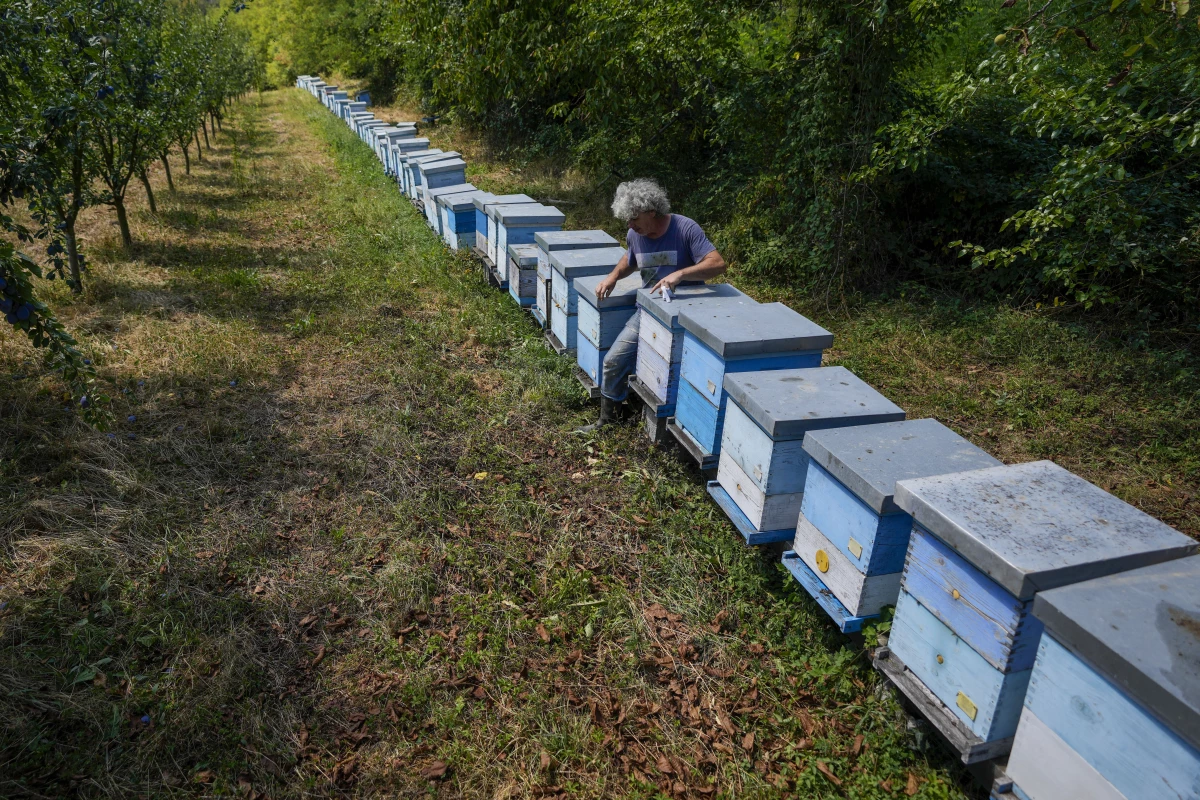
JADAR VALLEY, Serbia — Vladan Jakovljevic’s bees are angry. As he slowly lifts a cover from atop one of dozens of hives, they swarm, one of them stinging him in the cheek. He calls it a “bee kiss.”
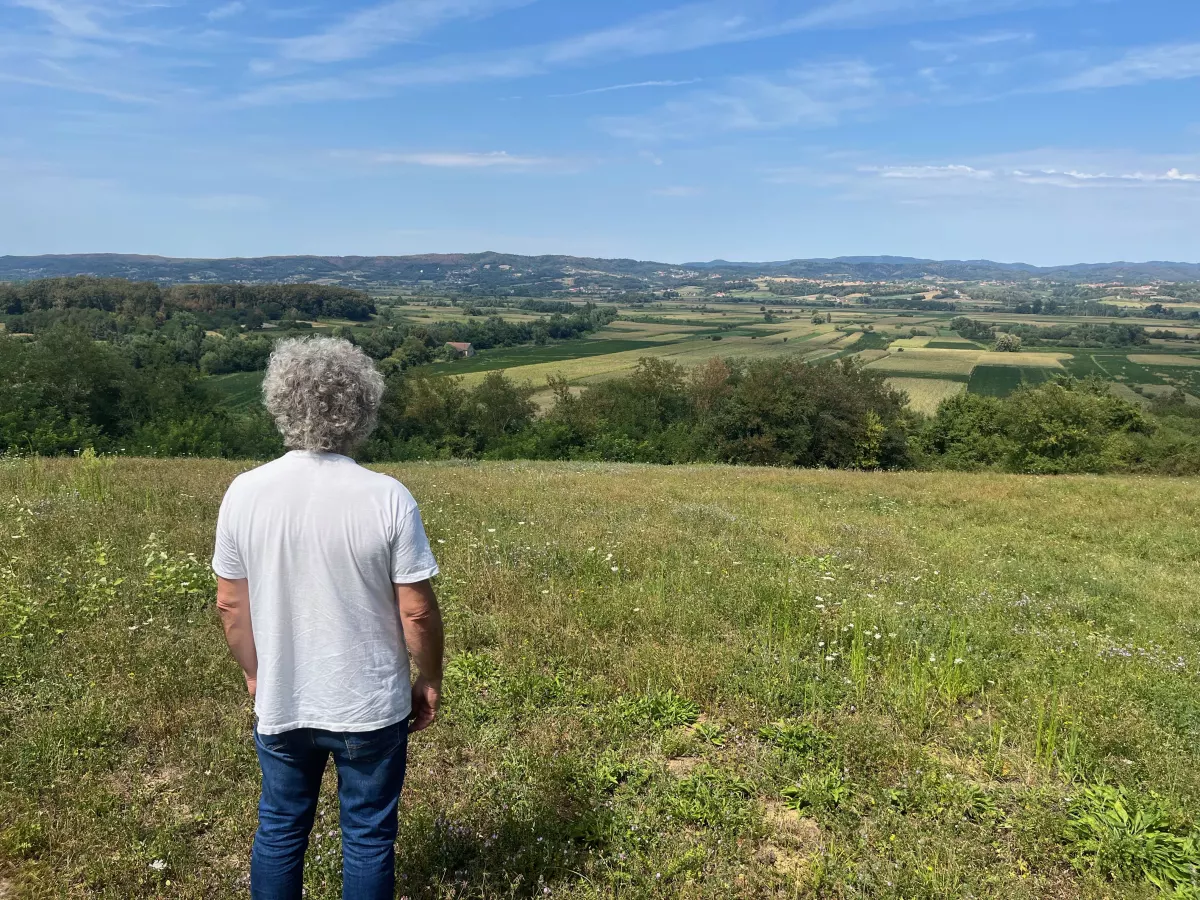
The 63-year-old beekeeper’s hives are scattered along a hillside overlooking the Jadar Valley’s bucolic green hills and red clay tile-roofed villages of western Serbia. Bees, he points out, are sensitive creatures. Changes in the environment can wipe out their hives. That’s why Jakovljevic is worried about plans to build one of Europe’s largest lithium mines in this valley.
“If there is any pollution in the river from this mine, bees in this region will die because they drink the water,” he says. “We’re talking about 10,000 bee communities that pollinate the crops that grow in the valley. This could cause a devastating chain reaction.”
The transition to a lower carbon emissions future depends on electric vehicles, and the batteries in those vehicles depend on lithium — a mineral in short supply and in big demand. But mining and refining lithium can have a big impact on local environments, and the residents of Jadar Valley have fought to protect theirs, spurring a national protest movement that has shed light on the environmental underbelly of the electric vehicle (EV) industry.
In the valley below Jakovljevic’s beehives lies the village of Latina, “salty” in English. Hundreds of feet below the surface of the Jadar Valley lie salty mineral deposits that give the drinking water here a distinctive taste.
Decades ago, scientists here discovered a new mineral they named jadarite, one rich in lithium and boron. After the Balkan wars of the 1990s, British Australian mining company Rio Tinto began drilling exploratory wells in Jadar Valley, confirming that it has one of Europe’s largest deposits of lithium. It’s so big it could meet an estimated 90% of Europe’s lithium needs. It could be a boon for a continent focused on transitioning to electric vehicles to cut emissions, and for mining giant Rio Tinto, guaranteed profits.
Scientists warn of potential environmental problems
The company recently drilled more exploratory wells, but the water that surfaced from deep below the earth has killed surrounding crops and polluted the river, according to a study published last month in the journal Nature. Scientists found “substantially elevated concentrations of boron, arsenic, and lithium downstream from the wells.”
“With the opening of the mine,” the scientists wrote, “problems will be multiplied by the tailings pond, mine wastewater, noise, air pollution, and light pollution, endangering the lives of numerous local communities and destroying their freshwater sources, agricultural land, livestock, and assets.”
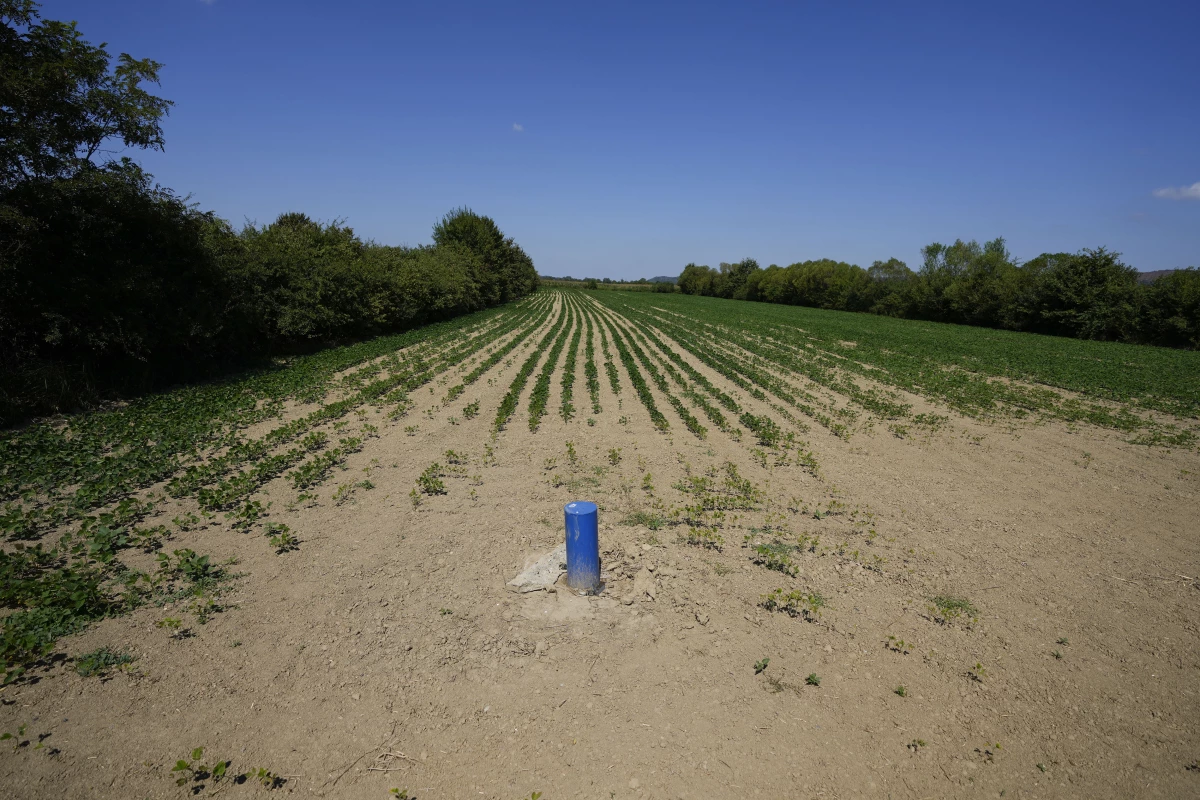
Beekeeper Jakovljevic says he was shocked when he read the article.
“After I read the findings of those scientists, I didn’t need to hear more about this project,” he says. “This mine must be stopped.”
Officials say it will meet strict standards and boost GDP
But officials in Serbia’s government say the mine holds great potential for the country. “We are all drinking the same water and we all breathe the same air, and we all have kids living here,” says Dubravka Djedovic Handanovic, Serbia’s mining and energy minister. “So we want the project implemented, yes, but we want it implemented according to environmental standards.”
Djedovic Handanovic insists the proposed mine would adhere to strict European Union environmental standards, even though Serbia has not yet become an EU member.
And she highlights the mine’s economic benefits. “Around 20,000 people could be employed in the whole value chain,” she says. “And when we are talking about value chain, we are not only talking the exploitation of the mine but actually refining processes, including the production of cathodes, production of batteries and ultimately the production of electric vehicles.”
She says this lithium mine has the potential to increase Serbia’s gross domestic product by 16%.
Protests against the mine are becoming routine
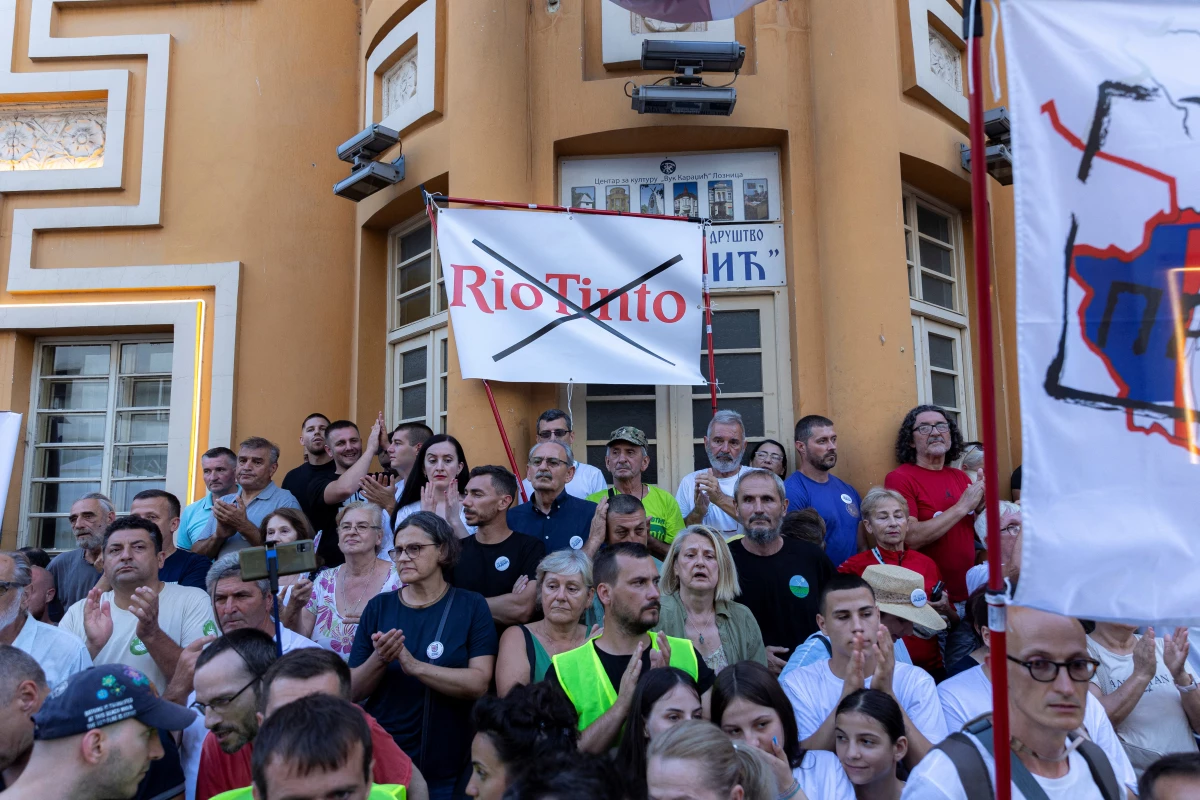
But many Serbs remain unpersuaded. Massive protests against the project have become routine in cities throughout the country since June, when a court decision cleared the path for the government to approve the mine. The decision came two years after a previous prime minister revoked Rio Tinto’s license following similar protests.
Jelena Isevski was one of tens of thousands who recently filled the streets of the capital of Belgrade to protest the mine.
“We are here to say that we are saying no to corporate powers that extract our country, just dig it out and leave trash, literally trash, for future generations,” she said over the chants of protesters.
Critics of the mine like Isevski also question the political motivations of the Serbian government. Serbia has applied for EU membership, and the EU’s largest economy, Germany — home to the continent’s largest electric vehicle companies — has voiced its strong support for this mine. For years, Europe’s wealthiest economies have wanted to shift away from depending on China, which refines 80% of the world’s lithium for EV batteries. Just a few weeks after a legal path had been cleared for the Jadar mine, the European Union signed a memorandum of understanding with Serbia’s government, launching what it called a “strategic partnership” on sustainable raw materials like lithium as well as battery value chains, and electric vehicles.
Isevski says the EU should look within its 27-country bloc for its lithium. “It’s not only Serbia that has lithium,” she says. “Why is this being done in a country like Serbia, that allegedly doesn’t have the right to fight back? There’s lithium in France, right?”
Opponents of the mine also question the track record of mining giant Rio Tinto, which has a checkered history in developing countries throughout the world, including a mine in Papua New Guinea whose environmental destruction spurred a nine-year civil war.
Rio Tinto commits to “transparency” and independent reviews
But Rio Tinto’s manager of its Serbia operations, Chad Blewitt, says times have changed. “We are committed to transparency,” he says. “We’ve learnt from all those incidents, including where there was a civil war in Papua New Guinea 35 years ago. That created a lot of our local content programs globally because we have to give back to the community.”
Blewitt’s own history at Rio Tinto includes working as a manager at the company’s Simandou iron ore mine in Guinea in 2011, the same year that company officials were found by U.S. Securities and Exchange Commission investigators to have bribed a Guinean political adviser. Last year, Rio Tinto settled with the SEC for $15 million over the violations.
Blewitt says in the case of the Jadar mine, Rio Tinto would be willing to allow independent experts to complete an environmental review of the project if it would help persuade those who question its impact on the ecosystem. As it stands, Blewitt calls Jadar “the most studied lithium project in Europe,” saying Rio Tinto has spent more than $600 million on it so far and says the studies found it would be safe.
Part of the company’s effort is outreach — Blewitt says Rio Tinto has held 150 information sessions for the local community and Serbia’s mining ministry has set up a call center to try to calm fears about the project, and about his company. “Last year we spent $85 million on community programs globally,” says Blewitt. “We gave back to governments around the world eight and a half billion US dollars in taxes. So I would say don’t judge Rio Tinto by what we are in the past.”
Back in the Jadar Valley, beekeeper Jakovljevic says if he and his neighbors can’t judge Rio Tinto by its past, then how, he asks, should they judge the company?
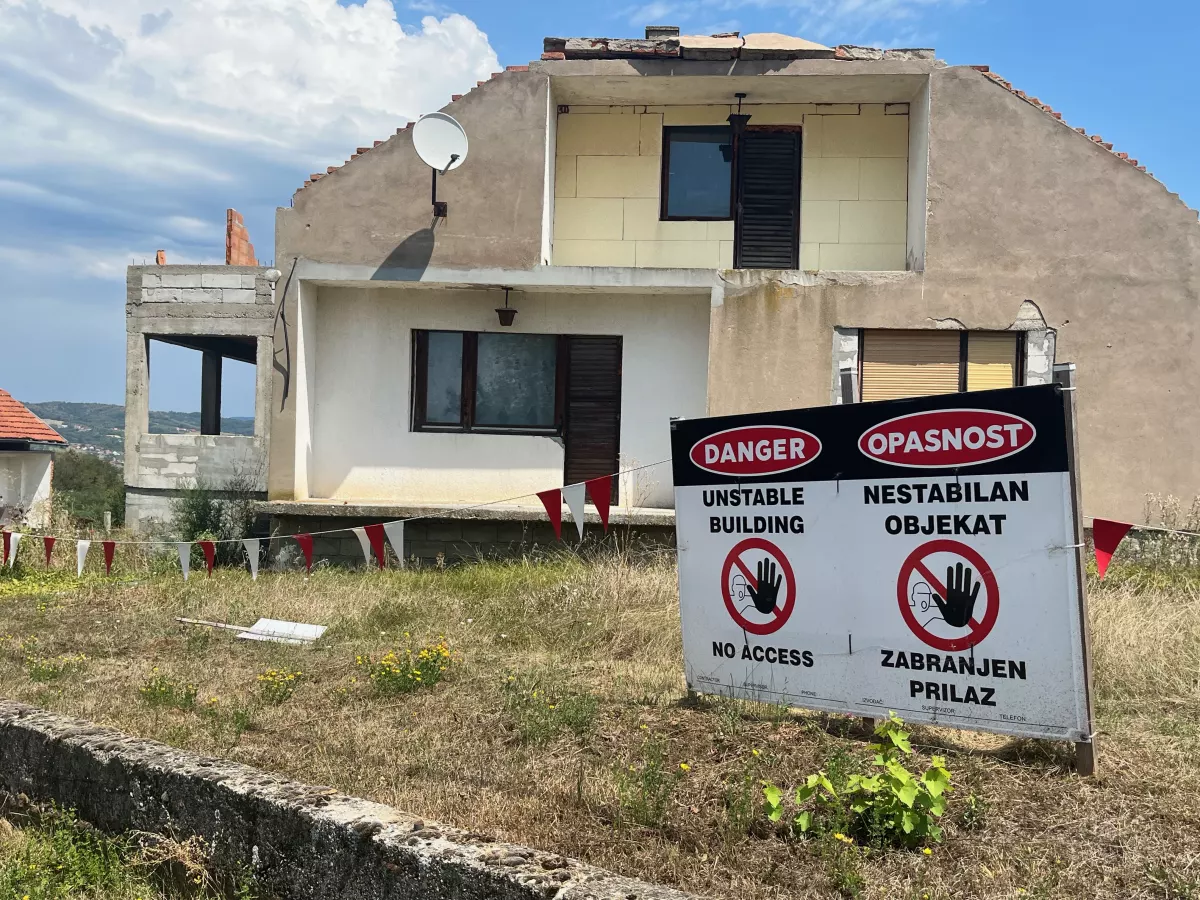
He’s joined by a neighbor, a literature teacher named Marijana Petkovic, and her dog for cool drinks in the shade on a hot summer’s day. Petkovic points to homes across the field behind her property where some neighbors have sold their land to Rio Tinto. Dozens of homes in the valley are cordoned off with tape and are being demolished to make way for the project.
Petkovic has been following this issue closely. She says she thinks that Rio Tinto still needs hundreds more acres of land to build the mine but that the rest of the valley’s residents are not willing to sell. “They’re going house to house asking our neighbors if they need anything or if Rio Tinto can help them in any way,” she says.
The employees work in an information center the company established in the valley, but Petkovic calls it a “disinformation” center. She says the Serbian government has already tried to change the law so it can expropriate land from homeowners, but protests a few years ago put a stop to it.
But she says the local government recently rezoned her and her neighbor’s land from “agricultural” to “construction,” which has her wondering if the government is about to try to take her land again. She says this makes her worry about the future of this valley, and for Serbia.
Transcript:
AILSA CHANG, HOST:
The transition to a lower carbon future depends on electric vehicles, and the batteries in those vehicles depend on lithium. That’s a mineral in short supply and in big demand. But mining lithium can have an outsized impact on the local environment. NPR Central Europe correspondent Rob Schmitz reports on why a proposed lithium mine in Serbia is spurring social unrest.
(SOUNDBITE OF BEES BUZZING)
ROB SCHMITZ, BYLINE: Vladan Jakovljevic’s bees are angry. As he lifts a hive cover, they swarm, one of them stinging him in the cheek. He calls it a bee kiss.
(SOUNDBITE OF BEES BUZZING)
SCHMITZ: Beekeeping is Jakovljevic’s livelihood here on a hillside overlooking the Yarra Valley’s bucolic green hills and red-clay-tile-roofed villages of Western Serbia. Bees, he points out, are sensitive creatures. Changes in the environment can wipe out their hives. That’s why Yakovlavich is worried about plans to build a lithium mine in this valley.
VLADAN JAKOVLJEVIC: (Non-English language spoken).
SCHMITZ: If there is any pollution in the river from this mine, bees in this region will die because they drink the water. We’re talking about 10,000 bee communities that pollinate the crops that grow in the valley. This could cause a devastating chain reaction, he says.
(SOUNDBITE OF BEES BUZZING)
SCHMITZ: In the valley below Yakovlavich’s beehives lies the village of Loznica, salty in English. Hundreds of feet below the surface lie salty mineral deposits. Decades ago, scientists here discovered a new mineral they named jadarite, one rich in lithium. After the Balkan wars of the 1990s, British Australian mining company Rio Tinto began drilling exploratory wells here, confirming that the Yarra Valley is one of Europe’s largest deposits of lithium, one so big it’s now estimated to meet 90% of Europe’s lithium needs – huge for a continent transitioning to electric vehicles to cut vehicle emissions, and for mining giant Rio Tinto, guaranteed profits.
The company recently drilled more exploratory wells, but the water that surfaced has killed surrounding crops and polluted the river, according to a study published last month in the journal Nature. The study found, quote, “substantially elevated concentrations of boron, arsenic and lithium downstream from the wells.” If the mine goes forward, said the article, problems will be multiplied.
JAKOVLJEVIC: (Speaking Serbian).
SCHMITZ: “After I read those findings,” says Yakovlavich, “I thought to myself, this mine must be stopped.”
DUBRAVKA DEDOVIC HANDANOVIC: We all drink the same water. And we all breathe the same air. And we all have kids living here.
SCHMITZ: Dubravka Dedovic Handanovic is Serbia’s minister of mining and energy.
DEDOVIC HANDANOVIC: We want the project implemented, yes, but we want it implemented according to environmental standards.
SCHMITZ: Dedovic Handanovic insists the proposed mine would adhere to strict European Union environmental standards, even though Serbia has not yet become an EU member. And she highlights the mine’s economic benefits.
DEDOVIC HANDANOVIC: Around 20,000 people could be employed in the whole value chain. We are not only talking the exploitation of the mine but refining processes, including the production of cathodes, production of batteries and ultimately the production of electric vehicles.
SCHMITZ: She says this lithium mine has the potential to increase Serbia’s GDP by 16%, but that does not seem to be persuading many Serbs.
(SOUNDBITE OF ARCHIVED RECORDING)
UNIDENTIFIED GROUP: (Chanting in Serbian).
SCHMITZ: Massive protests against the project have become routine throughout the country since June, when a court decision cleared the path for the government to approve the mine. The decision came two years after a previous prime minister revoked Rio Tinto’s license following similar protests. Jelena Isevski was one of tens of thousands that recently filled the streets of the capital Belgrade to protest the mine.
JELENA ISEVSKI: We are here to say that we are saying no to corporate powers that are going to extract our country, just dig it out and leave trash, literally trash and poison that’s going to poison future generations.
SCHMITZ: Protesters like Isevski also question the political motivations of the Serbian government. Serbia has applied for EU membership. And the EU’s largest economy, Germany, home to Europe’s largest electric vehicle companies, has voiced its strong support for this mine. Europe’s wealthiest economies have for years wanted to shift away from depending on China, which refines 80% of the world’s lithium for EV batteries. Last month the European Union signed a memorandum of understanding with Serbia’s government, launching what it called a strategic partnership on sustainable raw materials like lithium. Isevski says the EU should look inside the EU for its lithium.
ISEVSKI: It’s not only Serbia that has lithium. So why is this being done in a country like Serbia that allegedly doesn’t have the right to fight back? So there’s lithium in France, right?
SCHMITZ: Opponents of the mine also question the track record of mining giant Rio Tinto, which has a checkered history in developing countries throughout the world, including a mine in Papua New Guinea, whose environmental destruction spurred a nine-year civil war. But Rio Tinto’s manager of its Serbia operations, Chad Blewitt, says times have changed.
CHAD BLEWITT: We are committed to transparency. We’ve learned from all those incidents, including where there was a civil war in Papua New Guinea 35 years ago. That created a lot of our local content programs globally because, you know, we have to give back to the community.
SCHMITZ: Blewitt says Rio Tinto would be willing to allow independent experts to complete an environmental review of the Jadar Project. As it stands, Blewitt calls Jadar the most studied lithium project in Europe. He says Rio Tinto has spent more than $600 million on it so far. Blewitt says Rio Tinto has held 150 information sessions for the local community. And Serbia’s Ministry of Mining has set up a call center to try and calm fears about the project and about his company.
BLEWITT: Last year we spent $85 million on community programs globally. We gave back to governments around the world 8.5 billion U.S. dollars in taxes. So, I would say, don’t judge Rio Tinto what we are in the past.
SCHMITZ: Back in the Yarra Valley, beekeeper Vladan Jakovljevic says if he and his neighbors can’t judge Rio Tinto by what it’s done in the past, then how should they judge the company?
(SOUNDBITE OF DOG BARKING)
SCHMITZ: He’s joined by a neighbor, Marijana Petkovic, and her dog for cool drinks on a hot day. Petkovic points to homes across the fields, where neighbors have sold their land to Rio Tinto. Dozens of homes in this valley are cordoned off with tape and are being demolished to make way for the project. But Petkovic says Rio Tinto still needs hundreds of more acres of land to build the mine, and she doesn’t think the rest of the valley’s residents are willing to sell.
MARIJANA PETKOVIC: (Speaking Serbian).
SCHMITZ: She says Rio Tinto staff are going house to house asking if people need anything or any help. They work at an information center the company established in the valley. But Petkovic calls it a disinformation center. She says the Serbian government has already tried to change the law so that they can expropriate land from homeowners, but protests a few years ago put a stop to it. But she says the local government recently rezoned her and her neighbors land from agricultural to construction, and that, she says, worries her about the future of this valley and for Serbia. Rob Schmitz, NPR News, the Yarra Valley, Serbia.
