


Artists, filmmakers, and singers once championed Cesar Chavez as a hero. But now the late union organizer has been discredited — after revelations that he sexually abused two minors in the 1970s and raped Dolores Huerta, the co-founder of the UFW, the United Farm Workers. The creative community is responding and helping their communities process the news.
Chavez was once a Chicano icon, celebrated in corridos — ballads — sung by Lalo Guerrero (the “father of Chicano music”) and norteño groups like Los Tigres del Norte. Future songs may tell a different legend of Cesar Chavez.
The UFW has called off annual commemorations of Chavez planned for later this month. There are calls to reconsider schools and streets named after him; his statues are being removed, and street murals with his image erased.
“He’s being canceled everywhere,” says muralist and activist Judy Baca. She remembers marching with the UFW in the 1960s. Over the years, she’s created many monuments and murals with the image of Chavez. The revelations have unnerved her.
“Ugh, I’m sort of in between feeling like I’m going to be sick and or crying. It’s just been gut-wrenching,” she says from the Social and Public Art Resource Center (SPARC) studio in Santa Monica. “I’m so upset for my friend Dolores and for what she’s going through.”
Huerta, who turns 96 next month, says for more than 60 years, she kept secret that Chavez raped her. “I never talked about it to anybody,” she told The New York Times, “because I just didn’t want to hurt the movement.”
Baca and her team of artists have been working to update a huge mural on California history — The Great Wall of Los Angeles — to be installed along the Los Angeles River in time for the 2028 Summer Olympics. Huerta is depicted in the farmworker fields, holding a bullhorn that says “Huelga” — strike. For now, they’ve rolled up the canvas to cover Chavez’s image, and they’re considering alternatives.

“We’re going to come up with something pretty intelligent and interesting and not just simply disappearing and whiting out,” she says. “Because the truth is, what my work is about is non-erasure.”
Legendary theater and film director Luis Valdez says he’s heartbroken.
“It’s a nightmare that one of our leaders that we extolled and honored turned out to have this secret life, you know? It’s a shock. We’re all in grief,” says Valdez. “At the same time, we have Dolores, who’s still with us. God bless her.”
Valdez is founder and director of El Teatro Campesino, a theater troupe that started with the UFW in the 1960s. He says like many others, he was beaten and jailed for helping organize farmworkers.
“The work that was done was essential. There were many people that sacrificed,” says Valdez. “The real story of the farmworkers movement should not collapse at this time because of the frailties of one of its leaders. We need to not excuse it at all. He is guilty forever now, and tainted.”
Valdez suggests Chicanos were in such need of a national hero that Chavez was elevated to that role. He adds that he hopes Chavez’s legacy is not the only one to be scrutinized over alleged sex crimes, and that other powerful men should be accountable too.
Valdez is best known for writing and directing two momentous Chicano films — Zoot Suit and La Bamba. He also once wrote a screenplay about Cesar Chavez that was never greenlighted. Valdez says it didn’t address Chavez’s sexual abuse — something not yet revealed. But Valdez says the script did include Huerta’s long-term domestic partnership with Chavez’s brother.
“The story was too naked and too raw for the family,” Valdez says of the Chavezes.
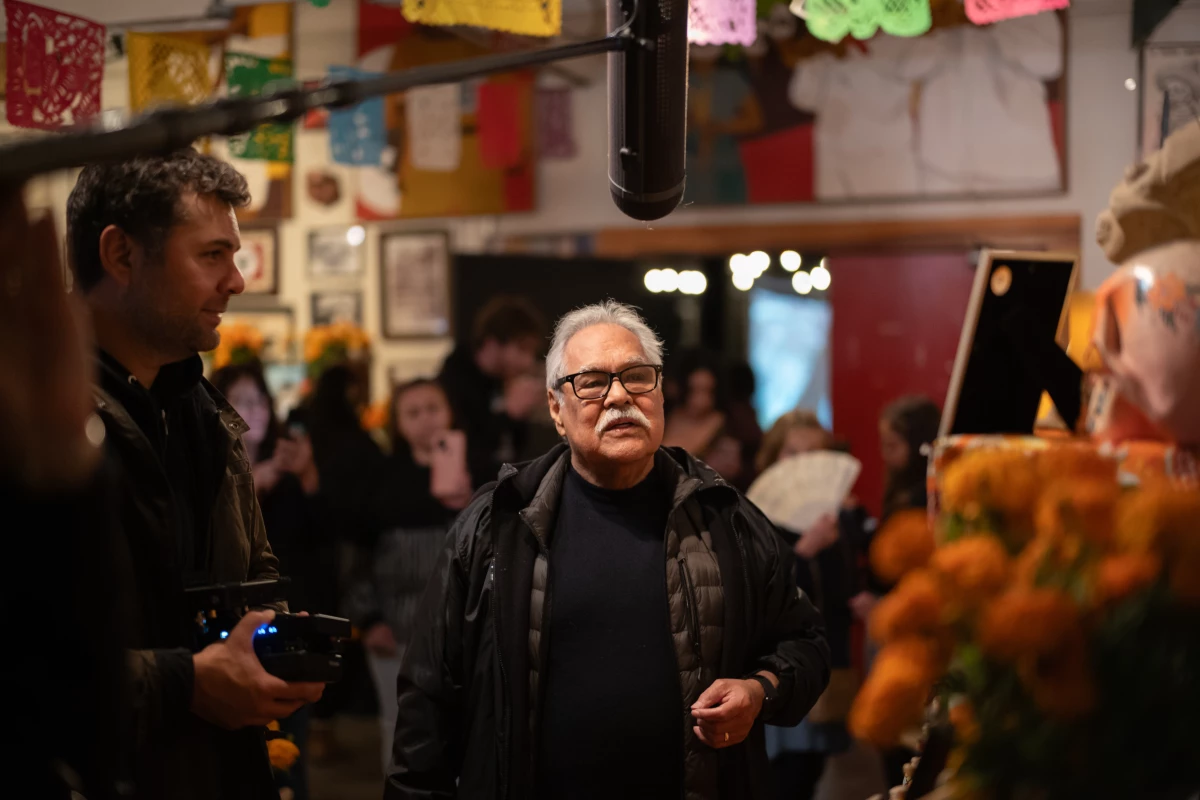
Later, in 2014, Diego Luna directed a somewhat glowing biopic of Chavez, starring Michael Peña. It’s not yet known if or how Chavez’s onscreen story will be told in the future. But some filmmakers are turning their gaze to other Chicano leaders.
Director Gregory Nava has been working on a feature film about Dolores Huerta, who coined the UFW rallying cry “Sí se puede” — “It can be done.” A source close to the production not authorized to speak on the record told NPR that the script is now being rewritten.
Meanwhile, filmmaker David Alvarado has a new documentary, American Pachuco: The Ballad of Luis Valdez, slated for theaters this summer and for PBS next fall. Edward James Olmos, who starred as a pachuco in the play and film Zoot Suit, narrates the story celebrating Valdez’s life and career.
The Houston Latino Film Festival screened the documentary to a sold-out audience on the same day the news of Chavez broke. Alvarado says he’d been nervous about any reaction to seeing footage of Chavez on screen.
“And what I found, to my great surprise,” he says, “was that people wanted to look directly at this topic, wanted to discuss it.”
After the screening, the audience stayed an extra 45 minutes for what turned out to be a safe space for them to process their feelings.
“People were in tears, and it went from being afraid of facing this directly in the eye, to a sort of empowerment, realizing that right now is the time to tell the story in a true way, in a different way.”
In Southern California, syndicated cartoonist Lalo Alcaraz responded with a drawing that has gone viral. It’s of a mural with Chavez on one side, Huerta on the other, and the UFW flag in the middle. A little girl is painting over Chavez’s face.
“It took me all day to do because it felt like therapy,” Alcaraz says, chuckling. “I’m not a therapy guy. You know, I’m the last guy that needs therapy. But apparently I did. And I think the whole community needs it.”
Last Friday, on their weekly KPFK radio show The Pocho Hour of Power, Alcaraz and his co-hosts invited psychotherapist Laura Calderón de la Barca to discuss how to process the news. Based in Mexico City, her work focuses on community healing.
“It’s horrifying news about Cesar Chavez,” co-host Esteban Zul said during the show.
“You go on social media, it’s a free-for-all,” Alcaraz added.
Calderón agreed, “This has been really a collective trauma.”
With her soothing voice, Calderón suggested ways to heal — by gathering, breathing deeply, and spending time in nature. She advised people to support survivors, and for men to reexamine their behavior.
Transcript:
SCOTT DETROW, HOST:
Artists, filmmakers and singers once exalted the late union organizer Cesar Chavez, but now the icon has been discredited after allegations that he sexually abused two minors in the 1970s and even raped Dolores Huerta, the co-founder of the UFW, the United Farm Workers union. NPR’s Mandalit del Barco reports on how the Chicano creative community is responding.
(SOUNDBITE OF SONG, “CESAR CHAVEZ”)
LOS TIGRES DEL NORTE: (Singing) Cesar Chavez, Cesar Chavez, Cesar Chavez.
MANDALIT DEL BARCO, BYLINE: Cesar Chavez was celebrated in corridos – ballads – sung by groups like Los Tigres del Norte, but future songs may tell a different legend. The UFW has called off commemorations of Chavez. There are calls to reconsider schools and streets named after him. His statues are being removed and street murals with his image erased.
JUDY BACA: He’s being canceled everywhere.
DEL BARCO: Muralist Judy Baca marched with the UFW in the 1960s, and over the years, she created many monuments and murals with the image of Chavez. The revelations have unnerved her.
BACA: Oh, I’m sort of in between feeling like I’m going to be sick or crying. It’s just been gut-wrenching. I’m so upset for my friend Dolores and for what she’s going through.
DEL BARCO: Huerta turns 96 next month. Baca and her team of artists have been working on a huge mural on California history to be installed for the 2028 Summer Olympics. Dolores Huerta is depicted in the farmworker fields, holding a bullhorn that says huelga – strike. For now, they’ve rolled up the canvas to cover Chavez’s image, and they’re considering alternatives.
BACA: We’re going to come up with something pretty intelligent and interesting and not just simply disappearing and whiting out. The truth is what my work is about is non-erasure.
DEL BARCO: Theater and film director Luis Valdez says the tragedy is heartbreaking.
LUIS VALDEZ: It’s a nightmare that one of our leaders, you know, that we extolled and honored turned out to have this secret life. We’re all in grief. At the same time, we have Dolores, who’s still with us. God bless her, you know?
DEL BARCO: Valdez is director of El Teatro Campesino, a theater troupe that started with the UFW in the 1960s. He says, like many others, he was beaten and jailed for helping organize farmworkers.
VALDEZ: There were many people that sacrificed. The real story of the farmworkers’ movement should not collapse because of the frailties of one of its leaders. We need to not excuse it at all. He is guilty, you know, forever now and tainted.
DEL BARCO: Valdez is best known for writing and directing two momentous Chicano films, “Zoot Suit” and “La Bamba.” He also once wrote a screenplay about Cesar Chavez that was never greenlighted.
VALDEZ: The story was too naked and too raw for the family.
DEL BARCO: Later, in 2014, Diego Luna directed a somewhat glowing biopic of Chavez, starring Michael Pena.
(SOUNDBITE OF FILM, “CESAR CHAVEZ”)
MICHAEL PENA: (As Cesar Chavez) I failed you as a leader, and I will fast until everyone makes a pledge recommitting themselves to nonviolence.
DEL BARCO: It’s unknown if or how Chavez’s on-screen story will be told in the future, but some filmmakers are turning their gaze to other Chicano leaders. Director Gregory Nava has been working on a feature film about Dolores Huerta. A source close to the production not authorized to speak on the record told NPR that script is now being rewritten. Meanwhile, filmmaker David Alvarado has a new documentary, “American Pachuco: The Ballad Of Luis Valdez” (ph).
(SOUNDBITE OF DOCUMENTARY, “AMERICAN PACHUCO: THE LEGEND OF LUIS VALDEZ”)
UNIDENTIFIED NARRATOR: The man is a living legend.
DEL BARCO: The Houston Latino Film Festival screened the doc the day the news of Chavez broke. Alvarado says he’d been nervous about the audience reaction to seeing footage of Chavez on screen.
DAVID ALVARADO: And what I found, to my great surprise, was that people wanted to look directly at this topic, wanted to discuss it.
DEL BARCO: He says after the screening, the audience stayed for what turned out to be a safe space to process their feelings.
ALVARADO: People were in tears, and I think it moved from being afraid to a sort of empowerment, realizing that right now is the time to tell the story in the true way, in a different way.
DEL BARCO: Syndicated cartoonist Lalo Alcaraz responded with a drawing that’s gone viral. It has a mural with Chavez on one side and Huerta on the other and the UFW flag in the middle. A little girl is painting over Chavez’s face.
LALO ALCARAZ: It took me all day to do because it felt like therapy. I’m not a therapy guy (laughter). I’m the last guy that needs therapy, but apparently I did. And I think the whole community needs it.
UNIDENTIFIED MUSICAL ARTIST: (Singing in Spanish).
DEL BARCO: Last Friday on the weekly KPFK radio show “The Pocho Hour Of Power,” Alcaraz and his co-host Esteban Zul invited psychotherapist Laura Calderon de la Barca to share their feelings. Her work focuses on community healing.
(SOUNDBITE OF RADIO SHOW, “THE POCHO HOUR OF POWER”)
ESTEBAN ZUL: It’s horrifying news about Cesar Chavez, right?
LAURA CALDERON DE LA BARCA: This has been really a collective trauma.
DEL BARCO: With her soothing voice, Calderon suggested ways to heal by gathering, breathing deeply and supporting survivors, and for men to reexamine their behavior.
Mandalit del Barco, NPR News.
